Wednesday, 24 March 2010

CULTURE/CLINIC – CALL FOR PAPERS


C/C is an English-speaking international journal of Lacanian psychoanalysis designed to bridge the gap between cultural and clinical elaborations by generating a dialogue between practitioners and the University.

Jacques-Alain Miller and Maire Jaanus, joint editors-in-chief for Culture/Clinic have decided on the two first themes for the launch of C/C in 2011 by Minnesota UP:


1) "All Mad"

In his last teaching Lacan reaches the conclusion that we are all delusional. So we are all mad. In his own teaching Miller suggested the expression 'a universal clinic of delusion'. At the time of the desperate search for mental health as key both to happiness and social order, psychoanalysis rather sees madness as the distinctive sign of speaking beings. It is thus inscribed more in the humanist lineage of Erasmus than in the classification in boxes of the DSM V. Yet the psychoanalytic clinic recognises the import of clinical categories and has made advances in generating models for these categories.


2) "Governing by numbers"

Governing is an impossible profession, said Freud. So is psychoanalysis. But it does not prevent us from either analyzing or governing, quite the contrary. This issue will broach the question through the clinic of discourses developed by Lacan from Seminar XVII onwards. The question of the development of the incidences of science on the discourse of the Master has transformed politics and practices of government. Is the Empire of the number taking over from that of the signifier? In which ways? And with what effects?

The Editors of C/C invite you to send your contributions on either one of these themes by July 15 2010. We are aware of the short time allowed for these first contributions but we would like to get the Journal off the ground as rapidly as we can. Texts should be between 5000 and 8 000 words, preferably in English (but can be sent in French too) at the following email address: cultureclinic@gmail.com

Please circulate this call for papers to anyone you think would be interested in contributing, or relevant mailing lists.
Suggestions or inquiries can be addressed to
veronique.voruz@le.ac.uk

Marie-Hélène Brousse, Managing Editor, C/C
Véronique Voruz, Coordinating Editor, C/C

Monday, 15 March 2010

Buzzing 2: Ecological Love and the jouissance of the fly


Man is ... a funny sort of animal, is he not? Where in the animal kingdom is the discourse of the master? Where in the animal kingdom is there a master? . . . if there were no language there would be no master ... because language exists you obey. Jacques Lacan, ‘Milan Discourse’ (1972).

Jouissance of the Other ... of the body of the Other who symbolizes the Other, is not a sign of love’. Jacques Lacan, Seminar XX (1972)

In Ecology without Nature (2007) Timothy Morton mounts an impressive attack on the ‘eco-mimesis’ that characterizes much environmental art and criticism which, in the wake of Romanticism, constructs a fantasy of immersion in the natural world that is indistinguishable from the contemplative state of the ‘beautiful soul’ whose pleasure precludes acknowledgement of participation in the environment and consequently ethical responsibility for it. In contrast, Morton wants to abolish the dream of nature and replace it with an ecology that recognises the creatures of the world as independent subjects with whom we should interact as such. Morton concludes his book by suggesting that the ‘best way to have ecological awareness is to love the world as a person’ (201). Furthermore, he writes, ‘the best way to love a person is to love what is most intimate to them, the “thing” embedded in their make up’(201). His specific example is provided by William Blake’s poem ‘The Fly’: ‘Am not I / A fly like thee? / And art not thou / A man like me?’ (see above)

What Morton means by ‘thing’ is not exactly clear, but given the prominence of Jacques Lacan in his readings (pp. 198, 202-3) I am assuming that it is a reference to the centrality of ‘das ding’ to Seminar VII. What, then, is das ding of the fly? It is a strange question because das ding is an effect of language; for Lacan, only speaking beings relate to a Thing around which the (death) drive, articulated by the whole Vorstellung of the subject, its means of self-representation, circulates. I am not sure that flies speak, although certainly they buzz. Can this buzzing represent the fly for the buzzing of all the other flies or for other speaking, musical, noise-making beings so that it might be loved as a person? What (ecological) system would need to be in place for this to be possible, and for such 'love' to become structurally mutual?

For Lacan, the very structure of the signifying chain implies some Thing outside it upon which the chain uncertainly grounds and articulates itself. The order of intimacy imagined for the world of nature, particularly animal nature, is often associated with the jouissance that has to be sacrificed in the name of human civilization. It is towards this jouissance that the drive aims, thereby becoming a death drive because it is located beyond the pleasure principle that marks the limit of civilized comforts that are always of course more or less comfortable for some. Projected in the void, the Thing is identified as both the absolute Good beyond the symbolic order and the absolute Evil of suffering implied through its deprivation by the Other. This Other, moreover, is always represented by another person, one’s neighbour, whom Christ commands that one love as oneself. Lacan notes that Freud ‘stops in horror’ at the Christian commandment to ‘love thy neighbour as thyself’ since it summons-up the unfathomable hostility that inhabits the neighbour that one recognises on the basis of one’s own hostility. ‘And what is closer to myself than that kernel of jouissance in myself to which I dare not approach?’. At the interior limit of the Thing (on the basis of which Morton suggests we must love another creature as a person), equivalence is established between jouissance and suffering: ‘he’ always enjoys at my expense and vice versa.

Animals are located squarely in this economy when Jeremy Bentham makes what is probably the founding ecological statement relative to ‘man’ and his animal neighbours: ‘The question is not can they reason, can they talk, but can they suffer?’ Introduction to the Principles of Morals and Legislation (1823). If animals can suffer, they can also enjoy, and it is certain that man sees that everywhere he looks. Moreover, it is on this essentially economic and imaginary basis (calculating the jouissance of the other) that ecology seeks to intervene in the world. This economic relation is also central to Blake’s poem, where, in the first stanza, it is precisely the jouissance of the little fly’s ‘summer’s play’ that provokes the violence of the poet’s ‘thoughtless hand’ (his unconscious wille or death drive, no doubt). Accordingly, this thoughtlessness immediately provokes the thought of equivalence between man and fly because the poet’s own jouissance (dancing, drinking, singing) will at some point be brushed aside by some other ‘blind hand’. The fourth stanza begins with a typical Blakean conditional: ‘If thought is life ... And the want / Of thought is death’, ‘Then am I / A happy fly, / If I live, Or if I die.’ While the ambiguity of this last stanza, based as it is on a conditional, can mean so many different things, Morton reads the poem as a ‘Cartesian meditation’ so that even though the mutable pleasures of the body are perceived to be as ephemeral as a fly, subject to the ‘blind’ vicissitudes of life and death, they provide the essential locus of happiness. At the same time, thought is able to maintain a sovereign distance through identifying with both. ‘Instead of bemoaning the fate of living beings ... the poem identifies with the “evil” (the “thoughtless,” “blind” mechanical operation) and with the insect’ (202). For Morton the poem has the doubleness of a Cartesian-Utilitarianism. Perhaps this can provide the rationale for an ecological, machinic ‘thought’ to manage the problem of the other's jouissance through a regime of happiness in which humans and animals (even flies) are equivalent and have equal rights? ‘Social mediation’, Morton writes, ‘is required to aid the creature’, a mediation based on what society imagines and ‘thinks’, which is to say calculates, about the creature’s ‘thing’, its jouissance (Morton, 2007: 202).

It is here that the ‘Cartesian-Utilitarian’ ecology seems to take on the same structure as contemporary capitalism where the master signifier is concerned with accounting for the right to jouissance. In his Milan Discourse (1972), Lacan provides an algorithm for capitalist discourse by adjusting slightly the Discourse of the Master. Capitalist Discourse is produced when the subject ($) displaces the signifier of the master from the position of agent to that of (repressed) truth below the bar (see above).

In ecological terms, we could say that Man-the-master (Man who masters nature precisely as an effect of naming it) is displaced by the animal-subject ($) who is liberated through its right to jouissance/happiness (a) which bears on it from the position of production. The signifier that marks the difference between ‘man’ and the ‘animal’ is displaced and they enjoy an imaginary equivalence in which an animal can be loved as a person even as humans are understood purely in terms of their drives and interests, calculated statistically, and understood through ‘swarm’ behaviour as part of ‘hive minds’ that ‘buzz’ in the network biosphere. It is of course this system of ‘bionomic’ ecological capitalism (S2) ‘socially mediates’ to produce the conditions that enable the animal-subjects ($) to enjoy and be happy. (S1) represents the laws of governance that command and regulate capitalism (S2) and its institutions to produce the surplus jouissance (a) that enables the animal-subjects to enjoy more or less equally in bovine contentment. Following the arrows, it can be seen that the discourse works in a continuous loop like a machine. In his Milan address, Lacan commented that ‘it is the cleverest discourse that we have made. It is no less headed for a blowout. This is because it is untenable . . . it suffices so that it goes on casters (ça marche comme sur des roulettes), indeed that cannot go better, but that goes too fast, that consumes itself, that consumes itself so that it is consumed (ça se consomme, ça se consomme si bien que ça se consume)’ (11). The animal-subjects consume themselves in the all-consuming machine, but they do it more or less painlessly; jouissance is regulated, distributed through the excess commanded by the ‘blind hand’ of the bioeconomic machinery of joy – or at least until the blow out.

Sunday, 21 February 2010

Buzzing (1) Schopenhauer, amusia and the fly


Music is as direct an objectification and copy of the whole will as the world itself … Music is thus by no means like the other arts, the copy of the Ideas, but the copy of the will itself, whose objectivity these Ideas are. This is why the effect of music is much more powerful and penetrating than that of the other arts, for they speak only of shadows, but it speaks of the thing itself. Arthur Schopenhauer, The World as Will and Idea trans. Haldane & Kemp, 1964 (I, III: 333)

It is the same will which objectifies itself both in the Ideas and in music, though in quite different ways (333).

According to all this we may regard the phenomenal world, or nature, and music as two different expressions of the same thing — Music never expresses the phenomenon, but only the inner nature, the in-itself of all phenomena, the will itself (338).

We might just as well call the world embodied music as embodied will (340).

The fly ought to be used as the symbol of impertinence and audacity; for whilst all other animals shun man more than anything else, and run away even before he comes near them, the fly lights upon his very nose. Arthur Schopenhauer, Studies in Pessimism (137).

Unlike his Romantic contemporaries … Schopenhauer views this abstract Wille as impersonal, blind, and indifferent to our wants and desires. There is no nature-for-us, much less any being-on-the-side of nature. Furthermore, the wille is, in itself, ‘nothing’, a gulf at the heart of the world as Vorstellung. Eugene Thacker, ‘Three Questions on Demonology’ in Hideous Gnosis: Black Metal Theory Symposium I edited by Nicola Masciandaro, Open Access, 2010.

Neither will nor Idea, music occupies a strange position in Schopenhauer’s philosophical system as the world’s uncanny double. The will is that mythical, noumenal (quasi-)force that is the in-itself of all things from physical forces like electricity and gravity to human desires and affects all of which are imperfect copies of Platonic Ideas. The latter are pure objectifications of the will, but they are not the will itself; the will is essentially in-different to Ideas just as it is indifferent to both humans and nature, that is to say both different from and indifferent to these things even as the will is objectified in them. The will as such is the in-human force of human striving, human ‘will’: ‘the nature of man consists in this, that his will strives, is satisfied and strives anew, and so on for ever’ in an interminable process that condemns human beings to continual dissatisfaction, suffering and ultimately death – the will wills its own death in human form in its own way. The will becomes a force in humanity and nature through becoming objectified (that is, objectifying itself) in Vorstellung: chains of ideas, concepts, presentations and representations, of which the ‘human’ is one among others. The world consists purely in ideas and representations that circulate, as Eugene Thacker suggests, a void, an effect of the will’s own self-negation, a ‘“nothing”, a gulf at the heart of the world as Vorstellung’ (HG: 188).

Music is heterogeneous to all of this, even as it repeats it, with a difference. Music is not Vorstellung; it is not an Idea, a concept or representation. It is, however, some form of objectification of the will, a copy of the will, but a copy that is so close it is able to express not phenomena or nature, but ‘only the inner nature, the in-itself of all phenomena, the will itself’ (338). Since this is exactly what the will does, vis-à-vis phenomena, music is an exact copy of the will. It is the double of the will and the same. As Schopenhauer also shows, music acts on the human subject in the same way as the will, exerting powerful effects directly ‘on the inmost nature of man’ in a way inaccessible to the other arts, reason and even mathematics which are bound up in the Vorstellung of ideas and concepts (329, 336). Music bears on, indeed articulates an unconscious knowledge of the ‘inner nature of the world’ which is beyond rational comprehension and verbal expression but may be expressed in musical composition: ‘the composer reveals the inner nature of the world and expresses the deepest wisdom in a language which his reason does not understand; as a person under the influence of mesmerism tells of things which he has no conception when he wakes’ (336). Notwithstanding all these ‘figures of speech’, language has no place here: knowledge of the inner nature of the world consists in wordless articulations of sound beyond even mathematical formulation – and Schopenhauer is adamant about this, music is not merely exercitium arithmeticae occultum nescientis se numerare animi [an exercise in arithmetic in which the mind does not know it is counting]. Music is thus not an aesthetic object whose formal consistency is guaranteed by mathematics, although Schopenhauer elsewhere hesitates about this, since it would be if music were to be regarded as a closed system. As a closed numerical system, music would not be able to ‘free itself from numbers without entirely ceasing to be music’ (331). This seems to be why Schopenhauer must regard music as an open system continuous with all the music of the world, all its buzzing and twittering, its sound and fury, from the birds and the bees to thunder and lightning: ‘we might just as well call the world embodied music as embodied will’ (340).

Music therefore for Schopenhauer offers a different relation to the world, to the ‘inner nature of the world’, than to the world as Vorstellung. This is because music is always double; it is both mimetic and anti-mimetic at the same time. On the one hand, since it is a copy of nothing but the will it is heterogeneous to all Vorstellung; it lies beyond all chains of signification, beyond all aesthetic and mathematical systems, and therefore beyond any possible discursive knowledge of the world. On the other, as a copying of the will in articulated sound, music sublimates and negates the will thereby producing and presenting the void within itself, the structural ex-nihilo out of which sprang the will in the first place, into which the will dissolves in its self-negation. It therefore establishes a position for itself outside of the will. How is this position exterior to both will and Vorstelling ‘known’ or experienced? Unconscious knowledge of this position is signalled by the experience of amusia relative to the world as ‘embodied music’ (340). The ‘void’ is signalled when the world as embodied music is experienced as a violent dissonance.

Appropriately, Schopenhauer does not discuss this in any other way than through recourse to his own experience. Helen Zimmern writing in 1876, 16 years after his death, comments on Schopenhauer’s acute sensitivity to the music of the world and its propensity to produce a degree of discordant agony that cuts him off from all ideas and representations. Describing his thought processes in terms of a hunt for ideas, Schopenhauer says,

Those ideas which I capture after many fruitless chases are generally the best. But if I am interrupted in one of these pursuits, especially if it be by the cry of an animal, which pierces between my thoughts, severing head from body, as by a headsman's axe, then I experience one of those pains to which we made ourselves liable when we descended into the same world as dogs, donkeys, and ducks.

The cry of an animal – Schopenhauer evokes, in the barking of dogs, the braying of donkeys and the quacking of ducks, the bucolic music of the countryside – literally severs his head from his body, placing him at the very limit of being in acephalic agony at complete variance with the world even as he enjoys the suffering of animals as his own. This radical disconnection, then, is also a profound connection with the ‘otherness’ of the animal in the inner experience of dissonant amusia.

In a famous comment in The World as Will and Idea on the higher capacity of suffering in complex beings relative to apparently simpler life forms, Schopenhauer notes that every time a man swats a fly, he implicitly ‘acknowledges that the fly suffers less from being killed than he suffers from being annoyed by it’ (see also Anders, Evolution of Evil : 195). Here, we see that the relation between man and animal is organized by an economy of suffering /jouissance, articulated by the locus of sound, in which the fly’s buzzing signifies a sovereign indifference that is ‘enjoyed’ at the expense of the philosopher. In Studies in Pessimism, Schopenhauer writes, ‘The fly ought to be used as the symbol of impertinence and audacity; for whilst all other animals shun man more than anything else, and run away even before he comes near them, the fly lights upon his very nose’ (137). The killing of the fly acknowledges that it represents a good that is inaccessible to him. The satisfaction gained from killing it is supposed to compensate for the suffering brought by the fly’s buzzing presence. It is another way in which man’s suffering /jouissance is located in the earth and violently extracted from it in a struggle over goods and satisfactions. This economy is at the same time also an ecology; they are, at root, almost the same words (oikos + nomos or logos). While ecology may or may not condemn killing flies, it is itself nothing other than a promise to redistribute the world’s goods based on knowledge of the world as Vorstellung of good and bad goods, an allocation of resources in which scientific-ecological knowledge assumes the force of law.

But killing the fly fails to compensate for anything. On the contrary, the gap opened up between man and fly is incommensurable even as it pitches on the philosopher’s nose, thereby presenting an idea of audacious freedom and impertinent autonomy relative to human knowledge. In Schopenhauer’s amusia there is an unconscious apprehension of a profound dissonance, resonating long after the death of the fly, that resounds from a place heterogeneous to any possible economy or ecology of suffering. There is no possible compensation. Accordingly, it is only from such a position of ‘audacious’ freedom and ‘impertinent’ autonomy, recognised in the dissonant music of the fly, that speaking beings can begin to address the problem of their relation to the world.

Sunday, 20 December 2009

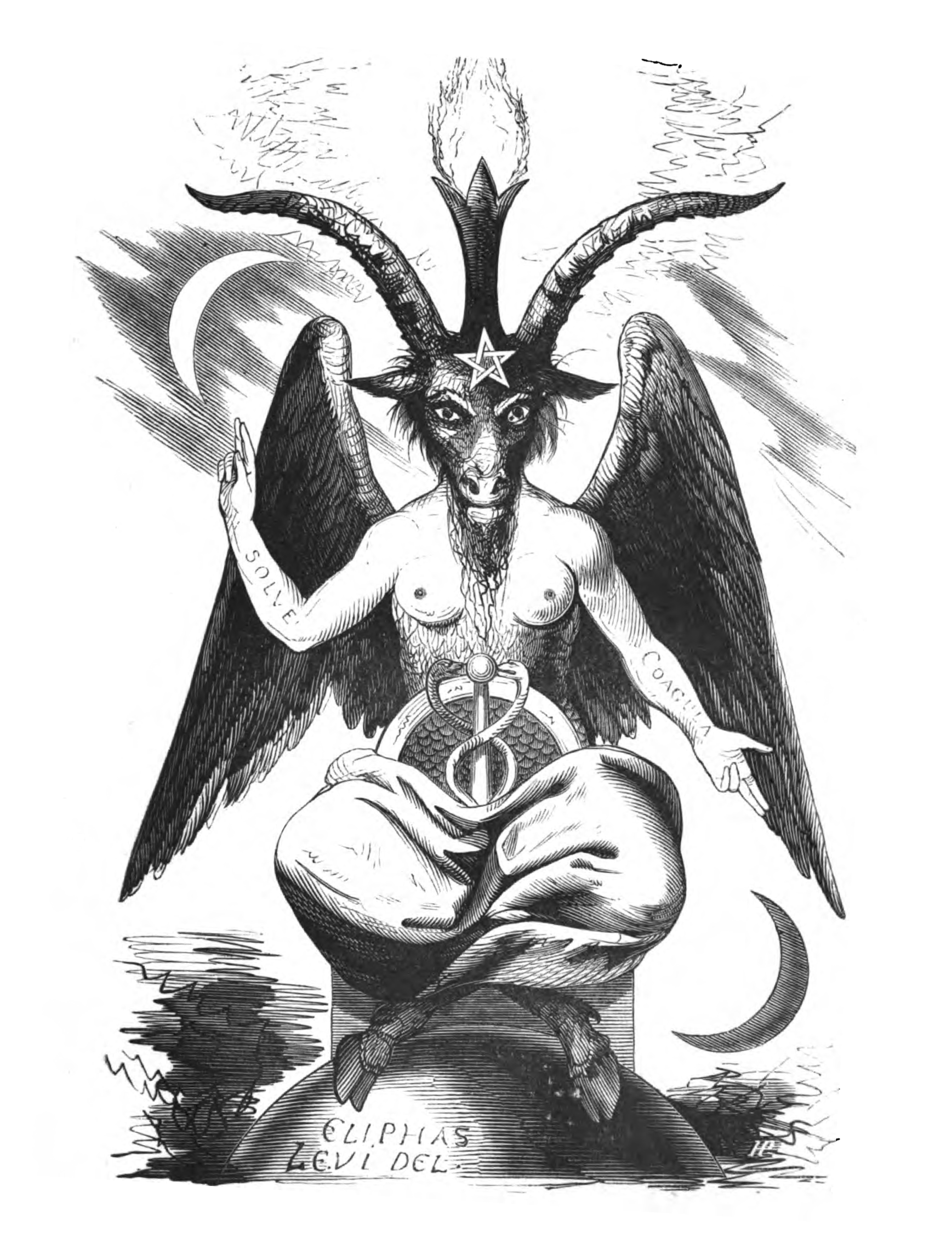
BPM: 5. Baphomet


‘All the gods died of laughter to hear one among them proclaim himself unique!’ Pierre Klossowski, The Baphomet

The disembodied soul of Øysten Aarseth, exhaled in his last dying breath and born on the icy winter wind, howled through the window of an old house outside Oslo. Dead lay there, still dead, half of his head still pressed up against the wood panelling, his knife and shotgun by his side, the floor splattered with dried blood and brain matter. Suspended in time, Dead’s last exhaled breath picked off the remaining layers of blasted skull and scooped out the putrefying tissue to disclose another head made of gold. A metalhead.

Aarseth was returned to his final state, on the day of his fatal stabbing. As the new golden-headed Dead seemingly arose from the dead, Aarseth got down on his knees before the strange goatlike yet godly creature, ‘My saviour!’ he stammered. ‘Why do you call me saviour and kneel to me like a God’ said Dead, ‘I am not a creator who enslaves being to what he creates, what he creates to a single self, and this self to a single body. Øysten, the millions of selves that you oppress within yourself are dead and have resurrected millions of times in you, unbeknownst to your single self’.

‘Is it not myself that you have rescued from the knife of Vikernes?’
‘In the suspension of historical time, events echo throughout infinity and individuals eternally. But everything a breath has perpetrated through its body can remain without consequence once it has left its body, since we differ in no wise from the winter wind’.

At this point another chill entered the room as the already-dead breath of Varg Vikernes merged with the breath of his victim, finding himself much weaker than the latter as he quickly sought to separate. Greeted with no sense of moral atonement, Vikernes was struck by a violence of another order to the one he perpetrated: one of total indifference, the worst kind of violence, an indifference that left no trace.

Dead’s golden head glinted in the darkness as he explained that the Judgement of God had been infinitely suspended since He became consumed in flames. ‘Henceforth humankind has changed in substance: it can be no more damned than saved’. Divine Judgement has been overturned, indeed displaced. In this atemporal space memories of the past are revived as momentary states of intensity, a funeral fog of fallen souls which, without identity or propriety, are exchangeable from soul to soul. ‘Here is no peace made of human flesh’ said Dead and prepared himself to breeze through the leaves of the forest.

‘You’re leaving me? Stop’, Aarseth begged. ‘By what name may I invoke you?’
‘What does my name matter to you? In truth I tell you: the millions of brothers and sisters inside you, who have died for your high idea of yourself – Euronymous! – know my name well, and are reborn in it; no proper name exists for the hyperbolic breath that is my own, anymore than anyone’s high idea of himself can resist the vertigo of my great height; my forehead dominates the stars and my feet stir the abysses of the universe’.

‘Spell it for me, I beg you, so I will have invoked you but once!’
Dead began:
‘B-A...’
‘Ba ...? repeated Euronymous.
‘P-H-O ...’ continued Dead.
‘...pho...?’
‘M-E-T...’
‘... Met!...’

Baphomet, otherwise known as Prince of Modifications, opposed to the Christian principle that guarantees the identity of the soul and the unity of being. To quote Pierre Klossowski, ‘Basilieus philosophorum métallicorum: the sovereign of metallurgical philosophers, precursors of black metal theorists, that is, of the alchemical laboratories that were supposedly established in various chapters of the knights Templar’. ‘The Prince of Modifications overturns all identity and absorbs being into the principle of radical multiplicity, that is to say within the principle of blackness.

Dead’s death-rattle laughter clattered through the night and the antichrist scuttled out from behind his feet in the form of an anteater. Friedrich the anteater in a high-pitched German accent affirmed, 'When one god proclaimed himself unique, all the other gods died of laughter!' Reborn in the breath of this laughter the million godlike hands find themselves again with something holy to burn, as the black metal circle turns eternally in a clamour for being that unfolds a process of becoming as infinite non-self-identical multiplicity beyond all figures of unity or of the One. ‘Anything can happen’, said Dead, ‘in the infinite blackening of the universe’.

‘Be faithful to your oblivion!’

Tuesday, 8 December 2009

BPM 4: Metaloricum


‘It's hard to imagine that Theory can bring much to Black Metal ... Blackened Theory -- destructive, chaotic evil, inhuman -- is imaginable. Theoried Blackness is harder to imagine. Can the tools of Theory be tools for Blackness?’ Raw, Obsolete

‘Although I have been involved in the BM scene for many years myself and listen mostly to BM today, I refuse to recognise any (substantial) intellectual achievements of this movement, because there aren't any’. Andreas Bauer

Certainly it is vain for theory to aspire to the condition of black metal, just as it would be for theory to aspire to the condition of any music at all even though, maybe, it achieves it all the time. Such an aspiration is familiar from Western philosophy generally, at least since Romanticism, wherein music is attributed with meaning and significance beyond language, an attribution precisely correlated to the degree to which music is also regarded as deficient, purely imaginary, devoid of theory, vehicle of base emotions ... etc. What devilish alchemy is this that turns base material into sonic gold only for it to turn to shit as the goat glances in the mirror? Oh black Narcissus, the exquisite horror of self-reflection! Black metal has no meaning, of course – but then neither does any music – even as it opens up, in the non-sense, the excess of meaning that it evokes; the domain of non-knowledge.

Black metal theory is forged through the process of its ‘tools’ being placed in the icy furnace of blackened affinities and affections, giving itself over to the power of modification to which BM is itself an effect, heterogeneous no doubt, but one that opens onto the same Night. Let us say that black metal theory cannot know – can never know – its object: the black metal that rings out in the impenetrable darkness of its so-called intellectual emptiness. Like an object sovereign in its exteriority, an object that is precisely not a thing – a thing for us – such an object would be God; that is to say the God that BM invokes in order to banish Him, the God that sits, perpetually exchanging places with Satan, at the mediating position between the possible and the impossible.

‘I myself am in a world I recognize as profoundly inaccessible to me’ (Bataille). ‘Faded am I, behind a wall of consciousness / Still feeling a different World / Surrounding Me’ (Darkthrone). Black metal, for some, for a few, provides the locus of this in-accessibility, provides the experience of non-knowledge that communicates ecstasy, that is to say places someone at the limit of being in a radical questioning of being itself. This questioning occurs in and as an inchoate experience that nevertheless provides the (groundless) ground of self-reflection in a speculation that reflects, interminably, on the im-possibility of indefinite and limitless being.


From the ground, frozen yet fulminating in the accursed seeds cast away by a thousand years of Christian frostiness, Northern Protestantism, the castrated hedonism dedicated to servicing the Goods, comes, in seven chapters, the
Kathaarian Life Code of Non-Knowledge (Darkthrone avec Bataille)

1. ‘The Triumph of chaos - Has Guided our Path / we Circle the holy Sinai’. Black metal blackening thought blackening metal blackening theory ... Like the circularity of the spectral drive that invokes God simply in order to exorcise Him from the vast nocturnal landscape that his death discloses. Black metal theory is circular; circular theory is the only plausible theory. ‘To be of one’s time is quite simply to be a stooge’ (Bat. SN: 107), the exploited dupe of slavish exigencies.
2. Circular theory must begin, which is to say continue, not from a proposition but from the blackness that precedes it, just as it culminates, which is to say begins, in the blackened knowledge that is non-knowledge. ‘A strong light – the only Night’.
3. Black metal glints in sparks mixed with Coyote eyes and resonates in shortened cycles which black metal theory can only describe, knowledge fired across the desertified landscape; instances of the nonknowledge of the moment.
4. ‘Face of the goat in the mirror’: the horror of self-reflexive nonrecognition discloses the black metal Baphomet, ‘Baphomet in steel’, the prince of modifications: ‘I entered the soul of the snake’, the one, no doubt, that consumed itself in a blaze of icy fire.
5. The dis-identification of Satan and the death of God, of the erotic and the laughable, the playful and the stupid, the poetic and the amusical, with the unknown is the key to all theoretical difficulties. Recognizing its worthlessness, its good-for-nothingness, theoretical knowledge returns with the dream of making its own God, a Paragon Belial, the sum and sublimation of all earthly insufficiencies. And yet ...
6. The substitution of absolute dissatisfaction, the invisible force of an abyssic hatred, for relative insufficiencies results in the passage from insubordination to sovereignty in a blasphemous cyclone of infernal in-difference, stirring in the metalorical furnace ...
7. The final nature of dissatisfaction is the truth of awakening:
For this Eternal Winter
A New God Ruled the Sky
The Million Hands Of Joy
Have something holy to Burn
A new God is invoked but only for the joy of again consuming Him in flames, for igniting the divine in-existence in a blaze in the Northern sky.

Wednesday, 25 November 2009

BPM 3: Philosophorum


‘Know yourself’

‘I know but one thing, that I know nothing’.

What can I know? By the word knowledge I don’t just mean the knowledge produced through the work of philosophy or academic discourse, or discourse per se, that is, the locus of a social bond; nor do I refer simply to the esoteric knowledge located in arcane texts and objects; nor do I mean the savoir faire, the know-how, of the musicians, the in-competence that produces BM’s magnificent yet ‘hellish racket’. All of these are important, and one can see that in so far as BM is an effect of discourse, it is a discourse that exacerbates the problem of the social bond through refusing comprehensibility by excoriating to the point of laceration voice and language in sonic aggression. And yet it is precisely through such sonic ascesis that the social bond is sustained, if negatively. Music is nothing but social bond, establishing a community of listeners somewhere that can perceive, and as such become bound by, a particular organization of sound. Otherwise music is no different from the indifferent howling of the wind that BM seeks to evoke, but always for somebody, if only just for oneself, to place oneself at the very limit of oneself where one is dissolved to NOTHING. This is the amusic of black metal: ‘my feelings already enclose me as in a tomb and yet, above me, I imagine a song similar to the modulation of light, from cloud to cloud ... in the unbearable expanse of the skies ... How can I avoid the intimate, never-ending, horror of being? ... This heart crying a thousand tender joys, how can I fail to open it to the void?’

As such, the blackened knowledge that I wish to invoke is, as the title of this symposium suggests, a hideous gnosis. This gnosis, like any gnosis hideous or not, is starred in the bleakness of the sky by the truth that is revealed through the work of intuition or of an ‘instinctive’ knowledge; that is to say, a knowledge that doesn’t know how it knows or even that it knows.

‘My music does not come from a philosophy but from a pre-critical compulsion, an instinct which comes prior to the thought and does not depend on it ... The negativity of my sound is simply the representation of my most hidden emotions’ (Ovskum).

Given that this so-called instinct comes in the form of music, it should more accurately be called a drive. An instinct (alimentary or sexual, say) that does not have a direct relation to its object but is mediated or shaped by a symbolic form is called a drive. And a drive has an indirect relation to its object, which is to say that it circulates it. Which is another way of saying that it has no object, there being no object; its God is dead. In the case of music and song this is the invocatory drive, a designation of course particularly appropriate to BM which perhaps consists entirely as an invocation: calling on God in order to contemplate and exult in the torment of his extinction, or the invocation of Satan in the conjuring-up of evil, that which will not serve.

In so far as it was harnessed and articulated by language, ‘Freud considered the drive to be structured like a montage’ (Lacan). In BM, the invocatory drive is articulated by the music to form the martial/amorous lamella-armour of the warrior decked in metal plates, spikes and bullet belts that is darkly erotic in the sense of being jenseits (beyond, the other side of, the dark side of) the lustprinzips. The lamellar armour of the drive forms an intensive surface that extends the organism (the voice) ‘to its true limit, which goes further than the body’s limit’ (Lacan), establishing its territory in and as the sound that unfolds an abyssal darkness into which the voice qua voice fades away. The unanswerable invocation reveals the deadly meaning of the lamella in the sense that the only meaning is the meaning of death. The prosthetic armour may for a while offer a semblance of protection, of existence, but its presence signifies only the vulnerability and inevitable death of the organism that it brings into battle. It is of course the armour, the weapons, the metal not the organism that actually contests the battle. Sound, that always refers back to a prior dissonance, that is always the sound of the elemental war for existence, kills even at the moment that it heralds the coming of death and silence. ‘This is why every drive is virtually a death drive’ (Lacan).

Invocation requires ritual and in BM that ritual is sacrifice:

At long last, did one not have to sacrifice for once whatever is comforting, holy, healing; all hope, all faith in hidden harmony, in future blisses and justices? Didn’t one have to sacrifice God himself? (Nietzsche)

The sacrifice of the subject of knowledge, the sacrifice of the subjectifying power of knowledge, discourse, speech at the attenuated limits of an excoriated voice become mere gasping breath that is always the last breath expiring in the sovereign space between life and death. In the strange processional yet timeless history of metal it is important to remember that black metal displaces death metal in order to find its brief illumination in the light of the freezing moon. This is not simply because the imaginary violence of the former gives way to the more profound imagination of violation that characterizes the latter. Violated, the BM voice is silenced in the midst of its hellish racket as it becomes pure sonic death-drive, nothing but a corpse-painted lamella, an undead tessellated sound-surface, endlessly breathing its last-breath death rattle as the metal goes into battle.

Hideous gnosis, the in-competence of an amusical death drive, which loses itself, dissipates itself at the site of nonknowledge marked by the name of death in the crucible of metalorical transformations...

Notes towards etc. (see below)

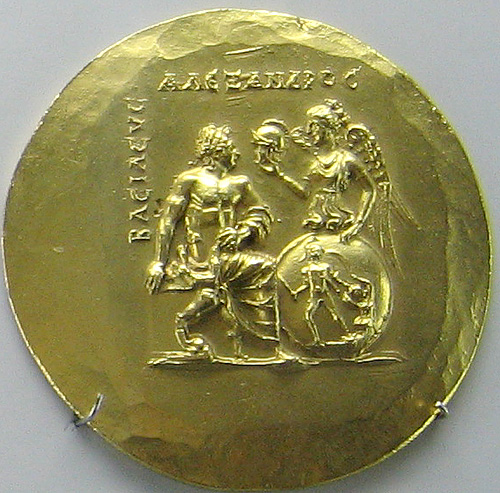
BPM 2: Basileus


‘When you play black metal you don’t play it like you were a human ... no no no, you play it like you’re a warrior’ Raffi (cit. Keith Kahn-Harris, Extreme Metal.

‘You play it like a warrior’, Legion, Marduk (ibid)

Mayhem, Emperor, Darkthrone, Beherit, Gorgoroth ... the names of some of BM’s most exalted bands would seem to bring together the sovereign anomie that Giorgio Agamben suggests characterizes the current state of affairs, ‘the state of exception’ that is turning Western democracies into totalitarian states (Agamben, 2005). But this is exactly what needs to be refused, just as certainly as the temptation to assign to BM the status of symptom: the exceptional symptom of the exception in which the fascism immanent to Western democracy enjoys itself in its pure negativity. Agamben cites Pseudo-Archytas's treaty On Law and Justice, in which the word Basileus is translated as ‘sovereign’ rather than ‘king’ because it ‘lays the foundations for a conception of sovereignty that is entirely unbound by laws and yet is itself the source of legitimacy’. This distinction is essential, but not for the reason Agamben finds in Pseudo-Archytas where ‘the distinction between the sovereign (basileus), who is the law, and the magistrate (arkhōn), who must only observe the law, is made the origin of twentieth-century Führerprinzip and of Carl Schmitt's theories on dictatorship. In the space opened by the severance of law and violence, a severance that implies a doubling of violence, Agamben fantasises about ‘a word that does not bind, that neither commands nor prohibits anything, but says only itself’, a word that would name a utopian state of unfettered ‘use and human praxis that the powers of law and myth had sought to capture in the state of exception’ (88). But there is no word that does not bind or prohibit or kill that which it names. Except, perhaps, the name of a loving God ...


Satanic laughter erupts from the depths of the forest. Agamben has no place there, even if the distinction first made by Pseudo-Archytas must remain: basileus should be translated as sovereign rather than king and legislator; and I name BM basileus in honour of its sovereign force. This force is not the force of a word, but of music (amusic) that can be felt only in warrior-like play. The warrior is a conceptual character that figures, fictionally, that ‘aspect that is opposed to the servile and the subordinate’, an aspect to which a beggar might be as close as any nobleman’ (Bataille, ASII).

‘When you play black metal you don’t play it like you were a human ... you play it like you’re a warrior’. The warrior is a metaphor, a character, you can’t BE a warrior, the warrior is not a figure of being any more than it is human. Nor is it in-human either, but completely other to the slavish being that takes itself for a form and a universal form at that. The warrior is a figure for the sovereign force of black metal, the closest related idea to which is clearly Bataille’s concept of sovereignty which designates exactly that which is heterogeneous to the sovereign function denoted by the sacralization of power (and of mastery), whether in the symbol or the body of the legislator-king. As Denis Hollier states,

Bataille’s concept of sovereignty corresponds to something that is much nearer … to the noncontractual liberty which is congenital with the warrior function. For the warrior has nothing to do with what one understands as a soldier or that Roman invention, ‘the military man’. Even when he is not the only one to be fighting, a warrior always fights alone: the solitary hero of single combats. And he fights for fighting’s sake, carried away by heroic fury. For the prestige of risk. Fundamentally undisciplined, he is the inspired warrior of the joust, the vates of the field of battle who, like Plato’s poet, can fight only as one possessed, transported.

And it is precisely in that poetic or musical movement of transportation that the sovereign aspect emerges as ‘the object dissolves into NOTHING’ (Bataille). Neither symbol nor living law but in the evanescent movement between sound and silence in the space-time between life and death, music is sovereign. As Derrida, following Bataille, affirms, ‘simultaneously more and less a lordship than lordship, sovereignty is totally other’. Hence, Darkthrone, Beherit, Gorgoroth, and all the other names for Lucifer and Satan that star the black metal firmament. And hence, perhaps above all, Mayhem. All are fictional names for the sovereign aspect that will serve no master and that refuses all forms of subordination. Neither force of law nor originary violence, the sovereign impulse is essential to any mode of rebellion, any breaching of closed systems, any process of transformation political or personal.

It is moreover only through actualizing this sovereign aspect that one might bring to bear the forces of black metal to the realization of one’s own powers. And this has absolutely nothing to do with individualism, mastery, subordination and so on. ‘Although I scorn the completely modern idea of “a self-made man”, as a Luciferist I solemnly hold up the view that man must reach as far as one can with his own powers’ (IC Rex). To where does one reach, what use are these powers? Such questions simply return us back to the ground on which we grovel ‘in the concatenation of useful activity’ (Bataille). Answers cannot be anticipated, future effects cannot be known since, as we do know very well, knowledge is always the result of work; ‘it is always a servile operation, indefinitely resumed, indefinitely repeated ... It is impossible for knowledge to be sovereign; it would have to occur in a moment. But the moment remains outside, short of or beyond, all knowledge’ (Bataille).

And yet, it is just such knowledge of the moment that is impossibly both inside and outside itself that is promised, paradoxically, in the black metal philosoPHOrum of hideous gnosis.

Notes towards a paper to be given at The Black Metal Theory Symposium, Public Assembly Rooms, Brooklyn, 12 December 2009.