Showing posts with label black metal. Show all posts

Sunday, 20 December 2009

BPM: 5. Baphomet


‘All the gods died of laughter to hear one among them proclaim himself unique!’ Pierre Klossowski, The Baphomet

The disembodied soul of Øysten Aarseth, exhaled in his last dying breath and born on the icy winter wind, howled through the window of an old house outside Oslo. Dead lay there, still dead, half of his head still pressed up against the wood panelling, his knife and shotgun by his side, the floor splattered with dried blood and brain matter. Suspended in time, Dead’s last exhaled breath picked off the remaining layers of blasted skull and scooped out the putrefying tissue to disclose another head made of gold. A metalhead.

Aarseth was returned to his final state, on the day of his fatal stabbing. As the new golden-headed Dead seemingly arose from the dead, Aarseth got down on his knees before the strange goatlike yet godly creature, ‘My saviour!’ he stammered. ‘Why do you call me saviour and kneel to me like a God’ said Dead, ‘I am not a creator who enslaves being to what he creates, what he creates to a single self, and this self to a single body. Øysten, the millions of selves that you oppress within yourself are dead and have resurrected millions of times in you, unbeknownst to your single self’.

‘Is it not myself that you have rescued from the knife of Vikernes?’
‘In the suspension of historical time, events echo throughout infinity and individuals eternally. But everything a breath has perpetrated through its body can remain without consequence once it has left its body, since we differ in no wise from the winter wind’.

At this point another chill entered the room as the already-dead breath of Varg Vikernes merged with the breath of his victim, finding himself much weaker than the latter as he quickly sought to separate. Greeted with no sense of moral atonement, Vikernes was struck by a violence of another order to the one he perpetrated: one of total indifference, the worst kind of violence, an indifference that left no trace.

Dead’s golden head glinted in the darkness as he explained that the Judgement of God had been infinitely suspended since He became consumed in flames. ‘Henceforth humankind has changed in substance: it can be no more damned than saved’. Divine Judgement has been overturned, indeed displaced. In this atemporal space memories of the past are revived as momentary states of intensity, a funeral fog of fallen souls which, without identity or propriety, are exchangeable from soul to soul. ‘Here is no peace made of human flesh’ said Dead and prepared himself to breeze through the leaves of the forest.

‘You’re leaving me? Stop’, Aarseth begged. ‘By what name may I invoke you?’
‘What does my name matter to you? In truth I tell you: the millions of brothers and sisters inside you, who have died for your high idea of yourself – Euronymous! – know my name well, and are reborn in it; no proper name exists for the hyperbolic breath that is my own, anymore than anyone’s high idea of himself can resist the vertigo of my great height; my forehead dominates the stars and my feet stir the abysses of the universe’.

‘Spell it for me, I beg you, so I will have invoked you but once!’
Dead began:
‘B-A...’
‘Ba ...? repeated Euronymous.
‘P-H-O ...’ continued Dead.
‘...pho...?’
‘M-E-T...’
‘... Met!...’

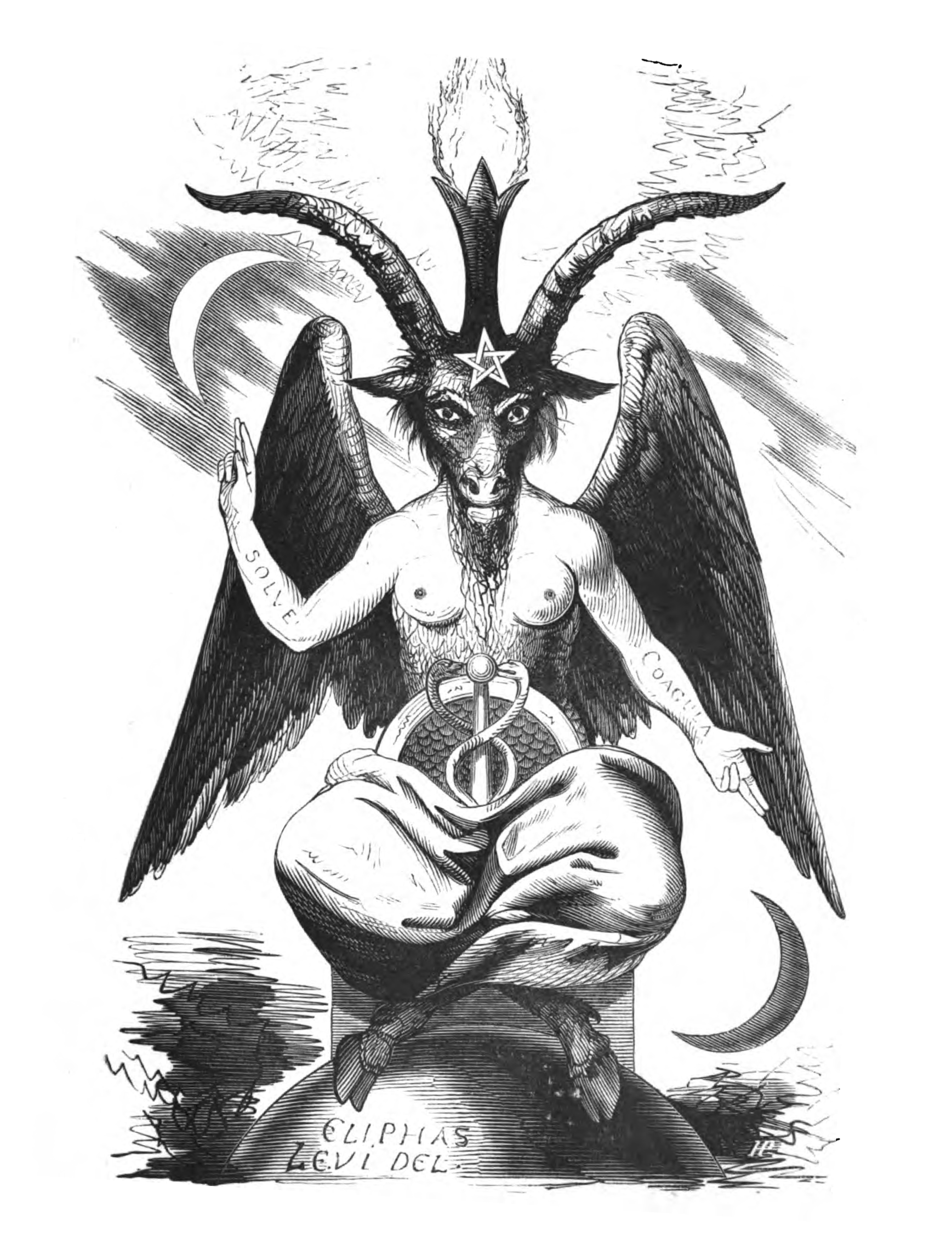
Baphomet, otherwise known as Prince of Modifications, opposed to the Christian principle that guarantees the identity of the soul and the unity of being. To quote Pierre Klossowski, ‘Basilieus philosophorum métallicorum: the sovereign of metallurgical philosophers, precursors of black metal theorists, that is, of the alchemical laboratories that were supposedly established in various chapters of the knights Templar’. ‘The Prince of Modifications overturns all identity and absorbs being into the principle of radical multiplicity, that is to say within the principle of blackness.

Dead’s death-rattle laughter clattered through the night and the antichrist scuttled out from behind his feet in the form of an anteater. Friedrich the anteater in a high-pitched German accent affirmed, 'When one god proclaimed himself unique, all the other gods died of laughter!' Reborn in the breath of this laughter the million godlike hands find themselves again with something holy to burn, as the black metal circle turns eternally in a clamour for being that unfolds a process of becoming as infinite non-self-identical multiplicity beyond all figures of unity or of the One. ‘Anything can happen’, said Dead, ‘in the infinite blackening of the universe’.

‘Be faithful to your oblivion!’

Tuesday, 8 December 2009

BPM 4: Metaloricum


‘It's hard to imagine that Theory can bring much to Black Metal ... Blackened Theory -- destructive, chaotic evil, inhuman -- is imaginable. Theoried Blackness is harder to imagine. Can the tools of Theory be tools for Blackness?’ Raw, Obsolete

‘Although I have been involved in the BM scene for many years myself and listen mostly to BM today, I refuse to recognise any (substantial) intellectual achievements of this movement, because there aren't any’. Andreas Bauer

Certainly it is vain for theory to aspire to the condition of black metal, just as it would be for theory to aspire to the condition of any music at all even though, maybe, it achieves it all the time. Such an aspiration is familiar from Western philosophy generally, at least since Romanticism, wherein music is attributed with meaning and significance beyond language, an attribution precisely correlated to the degree to which music is also regarded as deficient, purely imaginary, devoid of theory, vehicle of base emotions ... etc. What devilish alchemy is this that turns base material into sonic gold only for it to turn to shit as the goat glances in the mirror? Oh black Narcissus, the exquisite horror of self-reflection! Black metal has no meaning, of course – but then neither does any music – even as it opens up, in the non-sense, the excess of meaning that it evokes; the domain of non-knowledge.

Black metal theory is forged through the process of its ‘tools’ being placed in the icy furnace of blackened affinities and affections, giving itself over to the power of modification to which BM is itself an effect, heterogeneous no doubt, but one that opens onto the same Night. Let us say that black metal theory cannot know – can never know – its object: the black metal that rings out in the impenetrable darkness of its so-called intellectual emptiness. Like an object sovereign in its exteriority, an object that is precisely not a thing – a thing for us – such an object would be God; that is to say the God that BM invokes in order to banish Him, the God that sits, perpetually exchanging places with Satan, at the mediating position between the possible and the impossible.

‘I myself am in a world I recognize as profoundly inaccessible to me’ (Bataille). ‘Faded am I, behind a wall of consciousness / Still feeling a different World / Surrounding Me’ (Darkthrone). Black metal, for some, for a few, provides the locus of this in-accessibility, provides the experience of non-knowledge that communicates ecstasy, that is to say places someone at the limit of being in a radical questioning of being itself. This questioning occurs in and as an inchoate experience that nevertheless provides the (groundless) ground of self-reflection in a speculation that reflects, interminably, on the im-possibility of indefinite and limitless being.


From the ground, frozen yet fulminating in the accursed seeds cast away by a thousand years of Christian frostiness, Northern Protestantism, the castrated hedonism dedicated to servicing the Goods, comes, in seven chapters, the
Kathaarian Life Code of Non-Knowledge (Darkthrone avec Bataille)

1. ‘The Triumph of chaos - Has Guided our Path / we Circle the holy Sinai’. Black metal blackening thought blackening metal blackening theory ... Like the circularity of the spectral drive that invokes God simply in order to exorcise Him from the vast nocturnal landscape that his death discloses. Black metal theory is circular; circular theory is the only plausible theory. ‘To be of one’s time is quite simply to be a stooge’ (Bat. SN: 107), the exploited dupe of slavish exigencies.
2. Circular theory must begin, which is to say continue, not from a proposition but from the blackness that precedes it, just as it culminates, which is to say begins, in the blackened knowledge that is non-knowledge. ‘A strong light – the only Night’.
3. Black metal glints in sparks mixed with Coyote eyes and resonates in shortened cycles which black metal theory can only describe, knowledge fired across the desertified landscape; instances of the nonknowledge of the moment.
4. ‘Face of the goat in the mirror’: the horror of self-reflexive nonrecognition discloses the black metal Baphomet, ‘Baphomet in steel’, the prince of modifications: ‘I entered the soul of the snake’, the one, no doubt, that consumed itself in a blaze of icy fire.
5. The dis-identification of Satan and the death of God, of the erotic and the laughable, the playful and the stupid, the poetic and the amusical, with the unknown is the key to all theoretical difficulties. Recognizing its worthlessness, its good-for-nothingness, theoretical knowledge returns with the dream of making its own God, a Paragon Belial, the sum and sublimation of all earthly insufficiencies. And yet ...
6. The substitution of absolute dissatisfaction, the invisible force of an abyssic hatred, for relative insufficiencies results in the passage from insubordination to sovereignty in a blasphemous cyclone of infernal in-difference, stirring in the metalorical furnace ...
7. The final nature of dissatisfaction is the truth of awakening:
For this Eternal Winter
A New God Ruled the Sky
The Million Hands Of Joy
Have something holy to Burn
A new God is invoked but only for the joy of again consuming Him in flames, for igniting the divine in-existence in a blaze in the Northern sky.

Wednesday, 25 November 2009

BPM 3: Philosophorum


‘Know yourself’

‘I know but one thing, that I know nothing’.

What can I know? By the word knowledge I don’t just mean the knowledge produced through the work of philosophy or academic discourse, or discourse per se, that is, the locus of a social bond; nor do I refer simply to the esoteric knowledge located in arcane texts and objects; nor do I mean the savoir faire, the know-how, of the musicians, the in-competence that produces BM’s magnificent yet ‘hellish racket’. All of these are important, and one can see that in so far as BM is an effect of discourse, it is a discourse that exacerbates the problem of the social bond through refusing comprehensibility by excoriating to the point of laceration voice and language in sonic aggression. And yet it is precisely through such sonic ascesis that the social bond is sustained, if negatively. Music is nothing but social bond, establishing a community of listeners somewhere that can perceive, and as such become bound by, a particular organization of sound. Otherwise music is no different from the indifferent howling of the wind that BM seeks to evoke, but always for somebody, if only just for oneself, to place oneself at the very limit of oneself where one is dissolved to NOTHING. This is the amusic of black metal: ‘my feelings already enclose me as in a tomb and yet, above me, I imagine a song similar to the modulation of light, from cloud to cloud ... in the unbearable expanse of the skies ... How can I avoid the intimate, never-ending, horror of being? ... This heart crying a thousand tender joys, how can I fail to open it to the void?’

As such, the blackened knowledge that I wish to invoke is, as the title of this symposium suggests, a hideous gnosis. This gnosis, like any gnosis hideous or not, is starred in the bleakness of the sky by the truth that is revealed through the work of intuition or of an ‘instinctive’ knowledge; that is to say, a knowledge that doesn’t know how it knows or even that it knows.

‘My music does not come from a philosophy but from a pre-critical compulsion, an instinct which comes prior to the thought and does not depend on it ... The negativity of my sound is simply the representation of my most hidden emotions’ (Ovskum).

Given that this so-called instinct comes in the form of music, it should more accurately be called a drive. An instinct (alimentary or sexual, say) that does not have a direct relation to its object but is mediated or shaped by a symbolic form is called a drive. And a drive has an indirect relation to its object, which is to say that it circulates it. Which is another way of saying that it has no object, there being no object; its God is dead. In the case of music and song this is the invocatory drive, a designation of course particularly appropriate to BM which perhaps consists entirely as an invocation: calling on God in order to contemplate and exult in the torment of his extinction, or the invocation of Satan in the conjuring-up of evil, that which will not serve.

In so far as it was harnessed and articulated by language, ‘Freud considered the drive to be structured like a montage’ (Lacan). In BM, the invocatory drive is articulated by the music to form the martial/amorous lamella-armour of the warrior decked in metal plates, spikes and bullet belts that is darkly erotic in the sense of being jenseits (beyond, the other side of, the dark side of) the lustprinzips. The lamellar armour of the drive forms an intensive surface that extends the organism (the voice) ‘to its true limit, which goes further than the body’s limit’ (Lacan), establishing its territory in and as the sound that unfolds an abyssal darkness into which the voice qua voice fades away. The unanswerable invocation reveals the deadly meaning of the lamella in the sense that the only meaning is the meaning of death. The prosthetic armour may for a while offer a semblance of protection, of existence, but its presence signifies only the vulnerability and inevitable death of the organism that it brings into battle. It is of course the armour, the weapons, the metal not the organism that actually contests the battle. Sound, that always refers back to a prior dissonance, that is always the sound of the elemental war for existence, kills even at the moment that it heralds the coming of death and silence. ‘This is why every drive is virtually a death drive’ (Lacan).

Invocation requires ritual and in BM that ritual is sacrifice:

At long last, did one not have to sacrifice for once whatever is comforting, holy, healing; all hope, all faith in hidden harmony, in future blisses and justices? Didn’t one have to sacrifice God himself? (Nietzsche)

The sacrifice of the subject of knowledge, the sacrifice of the subjectifying power of knowledge, discourse, speech at the attenuated limits of an excoriated voice become mere gasping breath that is always the last breath expiring in the sovereign space between life and death. In the strange processional yet timeless history of metal it is important to remember that black metal displaces death metal in order to find its brief illumination in the light of the freezing moon. This is not simply because the imaginary violence of the former gives way to the more profound imagination of violation that characterizes the latter. Violated, the BM voice is silenced in the midst of its hellish racket as it becomes pure sonic death-drive, nothing but a corpse-painted lamella, an undead tessellated sound-surface, endlessly breathing its last-breath death rattle as the metal goes into battle.

Hideous gnosis, the in-competence of an amusical death drive, which loses itself, dissipates itself at the site of nonknowledge marked by the name of death in the crucible of metalorical transformations...

Notes towards etc. (see below)

BPM 2: Basileus


‘When you play black metal you don’t play it like you were a human ... no no no, you play it like you’re a warrior’ Raffi (cit. Keith Kahn-Harris, Extreme Metal.

‘You play it like a warrior’, Legion, Marduk (ibid)

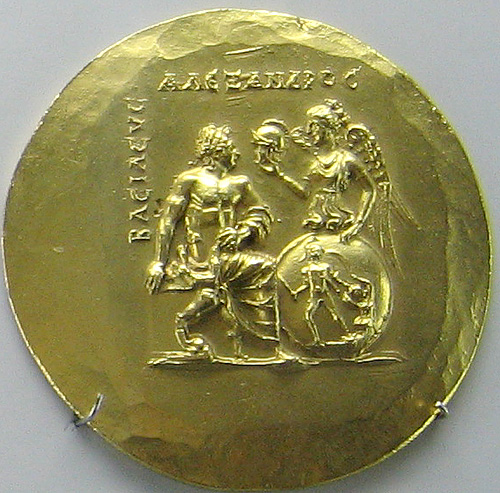
Mayhem, Emperor, Darkthrone, Beherit, Gorgoroth ... the names of some of BM’s most exalted bands would seem to bring together the sovereign anomie that Giorgio Agamben suggests characterizes the current state of affairs, ‘the state of exception’ that is turning Western democracies into totalitarian states (Agamben, 2005). But this is exactly what needs to be refused, just as certainly as the temptation to assign to BM the status of symptom: the exceptional symptom of the exception in which the fascism immanent to Western democracy enjoys itself in its pure negativity. Agamben cites Pseudo-Archytas's treaty On Law and Justice, in which the word Basileus is translated as ‘sovereign’ rather than ‘king’ because it ‘lays the foundations for a conception of sovereignty that is entirely unbound by laws and yet is itself the source of legitimacy’. This distinction is essential, but not for the reason Agamben finds in Pseudo-Archytas where ‘the distinction between the sovereign (basileus), who is the law, and the magistrate (arkhōn), who must only observe the law, is made the origin of twentieth-century Führerprinzip and of Carl Schmitt's theories on dictatorship. In the space opened by the severance of law and violence, a severance that implies a doubling of violence, Agamben fantasises about ‘a word that does not bind, that neither commands nor prohibits anything, but says only itself’, a word that would name a utopian state of unfettered ‘use and human praxis that the powers of law and myth had sought to capture in the state of exception’ (88). But there is no word that does not bind or prohibit or kill that which it names. Except, perhaps, the name of a loving God ...


Satanic laughter erupts from the depths of the forest. Agamben has no place there, even if the distinction first made by Pseudo-Archytas must remain: basileus should be translated as sovereign rather than king and legislator; and I name BM basileus in honour of its sovereign force. This force is not the force of a word, but of music (amusic) that can be felt only in warrior-like play. The warrior is a conceptual character that figures, fictionally, that ‘aspect that is opposed to the servile and the subordinate’, an aspect to which a beggar might be as close as any nobleman’ (Bataille, ASII).

‘When you play black metal you don’t play it like you were a human ... you play it like you’re a warrior’. The warrior is a metaphor, a character, you can’t BE a warrior, the warrior is not a figure of being any more than it is human. Nor is it in-human either, but completely other to the slavish being that takes itself for a form and a universal form at that. The warrior is a figure for the sovereign force of black metal, the closest related idea to which is clearly Bataille’s concept of sovereignty which designates exactly that which is heterogeneous to the sovereign function denoted by the sacralization of power (and of mastery), whether in the symbol or the body of the legislator-king. As Denis Hollier states,

Bataille’s concept of sovereignty corresponds to something that is much nearer … to the noncontractual liberty which is congenital with the warrior function. For the warrior has nothing to do with what one understands as a soldier or that Roman invention, ‘the military man’. Even when he is not the only one to be fighting, a warrior always fights alone: the solitary hero of single combats. And he fights for fighting’s sake, carried away by heroic fury. For the prestige of risk. Fundamentally undisciplined, he is the inspired warrior of the joust, the vates of the field of battle who, like Plato’s poet, can fight only as one possessed, transported.

And it is precisely in that poetic or musical movement of transportation that the sovereign aspect emerges as ‘the object dissolves into NOTHING’ (Bataille). Neither symbol nor living law but in the evanescent movement between sound and silence in the space-time between life and death, music is sovereign. As Derrida, following Bataille, affirms, ‘simultaneously more and less a lordship than lordship, sovereignty is totally other’. Hence, Darkthrone, Beherit, Gorgoroth, and all the other names for Lucifer and Satan that star the black metal firmament. And hence, perhaps above all, Mayhem. All are fictional names for the sovereign aspect that will serve no master and that refuses all forms of subordination. Neither force of law nor originary violence, the sovereign impulse is essential to any mode of rebellion, any breaching of closed systems, any process of transformation political or personal.

It is moreover only through actualizing this sovereign aspect that one might bring to bear the forces of black metal to the realization of one’s own powers. And this has absolutely nothing to do with individualism, mastery, subordination and so on. ‘Although I scorn the completely modern idea of “a self-made man”, as a Luciferist I solemnly hold up the view that man must reach as far as one can with his own powers’ (IC Rex). To where does one reach, what use are these powers? Such questions simply return us back to the ground on which we grovel ‘in the concatenation of useful activity’ (Bataille). Answers cannot be anticipated, future effects cannot be known since, as we do know very well, knowledge is always the result of work; ‘it is always a servile operation, indefinitely resumed, indefinitely repeated ... It is impossible for knowledge to be sovereign; it would have to occur in a moment. But the moment remains outside, short of or beyond, all knowledge’ (Bataille).

And yet, it is just such knowledge of the moment that is impossibly both inside and outside itself that is promised, paradoxically, in the black metal philosoPHOrum of hideous gnosis.

Notes towards a paper to be given at The Black Metal Theory Symposium, Public Assembly Rooms, Brooklyn, 12 December 2009.

Wednesday, 14 October 2009

BAsileus philosoPHOrum METaloricum 1: Blackened Symposium


Seeking death ... I ride the longing winds of my blackened soul eternally.
Emperor, ‘Ye Entrancemperium’

It is in death that black metal finds its infinite resourcefulness; the approach of death – its sovereign gesture, its prominence within human memory – hollows out in the present and in existence the void toward which and from which black metal resounds.
Michel Foucault, ‘Language to Infinity’

Already, with the very notion of a symposium, there is the expectation that music and speech will conjoin and, moreover, conjoin ‘with drinking’ (sum-posion) [Note to Nicola]. Most famously of all, Plato’s Symposium records a somewhat drunken dialogue on love and beauty from the 4th Century BC. Given the misanthropy that characterizes black metal, we might suppose that the Black Metal Theory Symposium will be more concerned with hatred, but of course you do not get one without the other. For the love of black metal we side with ‘the great adversary’ (Nortt) of existence. It is indeed a question of love and hatred and precisely not of judgement, for there is no possibility of conjunction between black metal and academic discourse since the whole point of the latter is to take the former for its object and place it under the spotlight, illuminate the darkness, set up a beacon in the obscure heart of the forest and flash an investigative torch into its sallow face.

Black metal and academic discourse are no doubt heterogeneous and cannot be conjoined, but in bringing one into proximity with the other it is, I believe, our expectation that this clash should result less in the academic illumination of black metal than in the blackening of discourse itself wherein the forces of black metal restore some of the powers and dangers of discourse which the procedures of academic institutions seek to ward off and master by controlling and delimiting them. There is a long history of such procedures but currently they are more often than not justified with reference to ‘ethical’ judgements concerning representations and the ‘power relations’ they are supposed to reproduce and re-instantiate, judgements that do nothing other than draw a work into the University’s own nexus of power/knowledge by which, as a biopolitical function of the state, it seeks to manage and regulate culture in the name of health, life and utility.

Black metal can bring its forces to discourse by drawing it into the freezing orbit of its sonic density, so that, suspended between life and the death that opens it to infinity, academic speech (and writing) might become drawn out of itself, erase itself for the exclusive sovereignty of that which it wishes to say and which lies outside of words. Heterogeneous to language, music, of course, refers to nothing but itself in the universe of sound except, perhaps, voice. Speech enters into the music and becomes it (becomes song) even as it dies, disappearing as music, breathing its last endless rasping breath, that is linked via Le Baphomet (Pierre Klossowski) to a theory of breathing itself linked, by so many threads, to the whole of Western philosophy, and yet which emerges from it, rendering permeable the limits of discourse.

My paper will suggest various ways in which black metal permeates and ‘blackens’ academic discourse across four polarities: the subject, knowledge, non-knowledge and truth. In so doing it encourages a displacement of academic conventions so that there is a constant contamination of force and affinity between black metal and discourse rather than the hierarchy of primary text and the commentary which decodes, recodes and re-states it interminably. Only in this way might commentary hope to have some bearing on ‘the art to come’. By way of example, I here invoke (as I have been throughout) Michel Foucault, that great adversary of commentary, whose theories of power have been catastrophically deployed by the institutions of liberal governance to the very purposes they were designed to undermine.

At the very end of his life, in the guise of a masked philosopher, Foucault dreamt ‘about a kind of criticism that would not try to judge ... it would light fires, (like a blaze in the Northern sky), catch the sea-foam in the breeze and scatter it. It would multiply, not judgements, but signs of existence in the freezing fog, make diabolic shapes float by out from the dark; it would summon them, drag them from their sleep. Perhaps it would invent them sometimes – all the better. All the better. ... I’d like a criticism of scintillating leaps of the imagination [that] would bear the lightning of possible storms’.

This lightning, that gives ‘a dense and black intensity to the night it denies’, conjures an enlightenment that is at the same time a chaotic storm, ‘which lights up the night from the inside, from top to bottom, and yet owes to the dark the stark clarity of its manifestation, its harrowing and poised singularity: the flash loses itself in this space it marks with its sovereignty and becomes silent now that it has given a name to obscurity’ (Foucault).

But as the light goes out and the voices are stilled, the wind yet whispers beside the deep forest that gives its name to this obscurity in which ‘Darkness will show us the way ...’ (Mayhem, ‘De Mysteriis Dom Sathanas’).

Notes towards a paper to be given at 'Hideous Gnosis', Black Metal Theory Symposium, Brooklyn 12 December 2009

Sunday, 23 August 2009

Pop journalism and the passion for ignorance


‘What sucks is when metal is co-opted by wannabe academic nerds’.
Chronic Youth

The hostility to academic commentary on popular culture that unites conservatives with pop journalists and bloggers everywhere surfaced again with knee-jerk predictability at the prospect of a Black Metal Theory symposium in Brooklyn this coming December. Both positions assume that either popular culture does not deserve critical inquiry or does not require it. Theory is either redundant or it misses the point which can only be grasped in authentic, inexpressible experience. See also here and here.

All this is jolly good fun and publicity for the event (so thanks again, guys) but I do feel professionally obliged to point out the irony that this hostility is precisely informed by (theoretical) assumptions that are themselves academic, though of a 19th-century Romantic variety. For example, Ben Jonson’s trenchant criticisms of his contemporary, Shakespeare, that he a) ‘knew small Latin and less Greek’ (hence his plays were one big Gothic mess), and b) ‘never blotted a line’ (and could therefore have done with some serious editing), were taken by the Romantics as evidence of Shakespeare’s Natural Genius. True artists must always be essentially unreflecting, intuitive, natural, and art always ‘beyond the last instance of criticism’ (Frank Kermode). All this does is to empower the Romantic critic who somehow knows (even better than the artist) without having to demonstrate or account for that knowledge, or indeed place it under scrutiny. I assume that this form of criticism is routinely trotted out by pop journo-jocks (often wannabee academic nerds themselves) because it is self-empowering and self-pleasuring. The discourse of the master: ‘I want to know nothing about it except that it gives me pleasure’.

Yes indeed it is about enjoyment and authority (and the enjoyment of authority) that is erected on the basis of the bizarre fear that academics might steal it. The fear is strangely paradoxical because, on the one hand, the cloistered ‘wannabee nerds’ can only press their noses up against the window of authentic experience, and on the other hand, there’s the threat that they might ‘co-opt’ it. The journalist must stick his fingers in his ears and shout it down, or present some caricature. This fear of the academic is completely imaginary and simply (re)produced in order to bolster the journalist’s authority and passion for ignorance: passion for the ignorance of the artist, for the incomprehensibility of the work, and the ineffable authenticity of his experience about which she wishes to know nothing except that she experiences it. But that’s cool, it’s important to be passionate about stuff.

Academics are fans too and can say just as many dumb things as anybody else, not necessarily because they are fans but usually because their discourse has become formulaic and predictable. As such academic discourse can be very boring indeed, especially if you compare it to the popular cultural objects that it talks about (although boredom is often, paradoxically, the interesting marker of a limit). Popular culture, which can also be incredibly boring, is informed (even or especially Black Metal) to varying degrees by academic discourse (art, literature, philosophy, religion etc. etc.), more or less interestingly. Whatever the use artists make of theory, academic discourse can only become interesting if it is modified and changed by its object in some way and is engaged by readers on its own (modified) terms.

This is what we are looking for: Black Metal fucks up academic discourse SHOCK! Now that would be a headline.

Monday, 16 February 2009

Abstract. Satanforladt: towards an impolitical atheology

The burning corpse of god shall keep us warm in the doom of howling winds. For we are a race from beyond the wanderers of night. -- Xasthur

Dødens nat
Alt er forladt
Kun en sang fra de sørgende ... -- Nortt, ‘Gravfred’

[Death’s night
All is forsaken
Only a song of mourning ...]

The aim of this commentary will be to excavate the traces of an event immanent to black metal. This event is the death of Satan. While it is conventional for black metal acts to be allied to Satan or indeed even assert that Satanism is ‘the true essence of black metal’ (Nortt), the essential is conveyed in sonic conflagrations of divine joy. This is eloquently expressed in Xasthur’s epigraph to the volume in which ‘the burning corpse of God shall keep us warm in the doom of howling winds’. Clearly there are two moments in this statement before it gives way to speculation concerning a people beyond the night. The death of God is not the same as the ‘doom’ which it shelters in the face of howling winds. God’s burning corpse both illuminates and heralds the doom of a much greater catastrophe: the death of Satan.

Satan’s role, as it has been handed down from Romanticism, is to sustain the trace of the divine in the wake of the death of God. The Prince of Darkness, in the playful gravity of his perpetual insurgency, is the last support of modernity’s Enlightenment project. Satan, as the untenable metaphor for nonknowledge, marks the boundaries of being and nothingness, joy and the abyss, centre and margin, life and death, man and beast; as the demonic figure of paradox, possession and the impossible, Satan threatens the undoing of these distinctions, holding them both together and apart. Should Satan forsake us and die, what happens? Can there be the worldwide governance of ‘globalatinization’, biopolitics, without the transpolitical mirror of evil?

While it remains unavowed in black metal, Satan’s withdrawal and demise is effectively and extensively mourned in its ritual howls of rage and sorrow, particularly the ambient/funeral doom of Xasthur, Nortt among others. But this commentary will pursue the hypothesis of Satanforladt, the double notion of the forsaking and withdrawal of Satan, throughout the general articulation of mourning and melancholy in black metal. This is the ‘doom’ that is immanent to black metal and which, at least at the level of its statements, precipitates three of its main tendencies. 1) the forsaking of Satan precipitates the retroactive precession of pagan simulacra without origin that both precedes and repeats Satanforladt (Ragnarök); 2) Satan’s forsaking is a punishment for the failure to live up to his demands – see for example Darkthrone’s ‘Unholy Black Metal’ that consists entirely in a series of impossible Satanic demands. The failure is evident in the toxic superegoic logic that propels the black metal death-drive for (self-) annihilation. 3) ‘To fall as Satan's heir’ (Nortt) or to celebrate the ‘funeral of being’ (Xasthur) is to inhabit the event of the death of Satan in an interminable wake that opens up a different temporality and speed (faster but slower) from which voice, in its in-audible commentary on its absence of meaning, comments, impossibly, on black metal’s amusical destruction of form.
Black metal is not a form of music nor simply an unholy racket, but an amusic that precipitates a trajectory of joyful, singular dissonance in (non)relation to the conformity of the age. It is in this way that black metal, in the wake of Satanforladt, broaches the exigencies an atheological, acephalic community without metaphor or limit ‘beyond the wanderers of the night’.

For Glossator special issue on black metal edited by Nicola Masciandaro and Reza Negarestani

Abstract. From Forests Unknown: ‘Eurometal’ and the political / audio unconscious

The idea of an audio political unconscious is suggested by Jacques Attali when he argues that music, as a particular organization of noise, heralds the coming of a future social order. The extremes of metal, however, push at the intensely pleasurable threshold of dis/organization in which music becomes noise as well as vice versa. Any notion of a future social order promised by metal therefore can only be seen as highly equivocal and as precluded as much as pre-empted. But that does not mean that immanent to metal there isn't the possibility of some future thinking of the political. Certainly the extremes of metal exist in the absence of any political thought adequate to the current state of affairs. Across Europe, old and new, national and regional varieties of DM, BM, Viking, battle, folk, doom and ambient have tracked the expansion of the EU and its borderlands. At the same time, the expansion of the homogenizing force of the techno-bureaucratic EU, that is itself a symptom of the failure of the nation-state in the face of global capital, has left a trail of discontents, some of which have found a voice in metal. This chapter looks at metal as the bearer of both a political and audio unconscious in which can be located, along different tracks, the positive reverse of the absence of any European popular culture in which could be located a political alternative to the ‘globalatinization’ represented by institutions like the EU.

For an ebook Title tba edited by Imke von Helden and Niall Scott, Inter-Disciplinary Press.