Wednesday, 25 November 2009

BPM 3: Philosophorum


‘Know yourself’

‘I know but one thing, that I know nothing’.

What can I know? By the word knowledge I don’t just mean the knowledge produced through the work of philosophy or academic discourse, or discourse per se, that is, the locus of a social bond; nor do I refer simply to the esoteric knowledge located in arcane texts and objects; nor do I mean the savoir faire, the know-how, of the musicians, the in-competence that produces BM’s magnificent yet ‘hellish racket’. All of these are important, and one can see that in so far as BM is an effect of discourse, it is a discourse that exacerbates the problem of the social bond through refusing comprehensibility by excoriating to the point of laceration voice and language in sonic aggression. And yet it is precisely through such sonic ascesis that the social bond is sustained, if negatively. Music is nothing but social bond, establishing a community of listeners somewhere that can perceive, and as such become bound by, a particular organization of sound. Otherwise music is no different from the indifferent howling of the wind that BM seeks to evoke, but always for somebody, if only just for oneself, to place oneself at the very limit of oneself where one is dissolved to NOTHING. This is the amusic of black metal: ‘my feelings already enclose me as in a tomb and yet, above me, I imagine a song similar to the modulation of light, from cloud to cloud ... in the unbearable expanse of the skies ... How can I avoid the intimate, never-ending, horror of being? ... This heart crying a thousand tender joys, how can I fail to open it to the void?’

As such, the blackened knowledge that I wish to invoke is, as the title of this symposium suggests, a hideous gnosis. This gnosis, like any gnosis hideous or not, is starred in the bleakness of the sky by the truth that is revealed through the work of intuition or of an ‘instinctive’ knowledge; that is to say, a knowledge that doesn’t know how it knows or even that it knows.

‘My music does not come from a philosophy but from a pre-critical compulsion, an instinct which comes prior to the thought and does not depend on it ... The negativity of my sound is simply the representation of my most hidden emotions’ (Ovskum).

Given that this so-called instinct comes in the form of music, it should more accurately be called a drive. An instinct (alimentary or sexual, say) that does not have a direct relation to its object but is mediated or shaped by a symbolic form is called a drive. And a drive has an indirect relation to its object, which is to say that it circulates it. Which is another way of saying that it has no object, there being no object; its God is dead. In the case of music and song this is the invocatory drive, a designation of course particularly appropriate to BM which perhaps consists entirely as an invocation: calling on God in order to contemplate and exult in the torment of his extinction, or the invocation of Satan in the conjuring-up of evil, that which will not serve.

In so far as it was harnessed and articulated by language, ‘Freud considered the drive to be structured like a montage’ (Lacan). In BM, the invocatory drive is articulated by the music to form the martial/amorous lamella-armour of the warrior decked in metal plates, spikes and bullet belts that is darkly erotic in the sense of being jenseits (beyond, the other side of, the dark side of) the lustprinzips. The lamellar armour of the drive forms an intensive surface that extends the organism (the voice) ‘to its true limit, which goes further than the body’s limit’ (Lacan), establishing its territory in and as the sound that unfolds an abyssal darkness into which the voice qua voice fades away. The unanswerable invocation reveals the deadly meaning of the lamella in the sense that the only meaning is the meaning of death. The prosthetic armour may for a while offer a semblance of protection, of existence, but its presence signifies only the vulnerability and inevitable death of the organism that it brings into battle. It is of course the armour, the weapons, the metal not the organism that actually contests the battle. Sound, that always refers back to a prior dissonance, that is always the sound of the elemental war for existence, kills even at the moment that it heralds the coming of death and silence. ‘This is why every drive is virtually a death drive’ (Lacan).

Invocation requires ritual and in BM that ritual is sacrifice:

At long last, did one not have to sacrifice for once whatever is comforting, holy, healing; all hope, all faith in hidden harmony, in future blisses and justices? Didn’t one have to sacrifice God himself? (Nietzsche)

The sacrifice of the subject of knowledge, the sacrifice of the subjectifying power of knowledge, discourse, speech at the attenuated limits of an excoriated voice become mere gasping breath that is always the last breath expiring in the sovereign space between life and death. In the strange processional yet timeless history of metal it is important to remember that black metal displaces death metal in order to find its brief illumination in the light of the freezing moon. This is not simply because the imaginary violence of the former gives way to the more profound imagination of violation that characterizes the latter. Violated, the BM voice is silenced in the midst of its hellish racket as it becomes pure sonic death-drive, nothing but a corpse-painted lamella, an undead tessellated sound-surface, endlessly breathing its last-breath death rattle as the metal goes into battle.

Hideous gnosis, the in-competence of an amusical death drive, which loses itself, dissipates itself at the site of nonknowledge marked by the name of death in the crucible of metalorical transformations...

Notes towards etc. (see below)

BPM 2: Basileus


‘When you play black metal you don’t play it like you were a human ... no no no, you play it like you’re a warrior’ Raffi (cit. Keith Kahn-Harris, Extreme Metal.

‘You play it like a warrior’, Legion, Marduk (ibid)

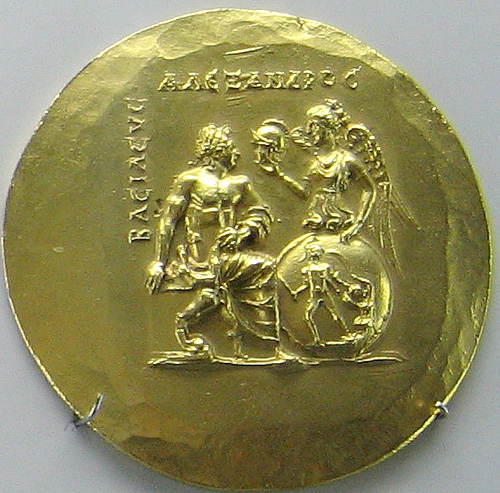
Mayhem, Emperor, Darkthrone, Beherit, Gorgoroth ... the names of some of BM’s most exalted bands would seem to bring together the sovereign anomie that Giorgio Agamben suggests characterizes the current state of affairs, ‘the state of exception’ that is turning Western democracies into totalitarian states (Agamben, 2005). But this is exactly what needs to be refused, just as certainly as the temptation to assign to BM the status of symptom: the exceptional symptom of the exception in which the fascism immanent to Western democracy enjoys itself in its pure negativity. Agamben cites Pseudo-Archytas's treaty On Law and Justice, in which the word Basileus is translated as ‘sovereign’ rather than ‘king’ because it ‘lays the foundations for a conception of sovereignty that is entirely unbound by laws and yet is itself the source of legitimacy’. This distinction is essential, but not for the reason Agamben finds in Pseudo-Archytas where ‘the distinction between the sovereign (basileus), who is the law, and the magistrate (arkhōn), who must only observe the law, is made the origin of twentieth-century Führerprinzip and of Carl Schmitt's theories on dictatorship. In the space opened by the severance of law and violence, a severance that implies a doubling of violence, Agamben fantasises about ‘a word that does not bind, that neither commands nor prohibits anything, but says only itself’, a word that would name a utopian state of unfettered ‘use and human praxis that the powers of law and myth had sought to capture in the state of exception’ (88). But there is no word that does not bind or prohibit or kill that which it names. Except, perhaps, the name of a loving God ...


Satanic laughter erupts from the depths of the forest. Agamben has no place there, even if the distinction first made by Pseudo-Archytas must remain: basileus should be translated as sovereign rather than king and legislator; and I name BM basileus in honour of its sovereign force. This force is not the force of a word, but of music (amusic) that can be felt only in warrior-like play. The warrior is a conceptual character that figures, fictionally, that ‘aspect that is opposed to the servile and the subordinate’, an aspect to which a beggar might be as close as any nobleman’ (Bataille, ASII).

‘When you play black metal you don’t play it like you were a human ... you play it like you’re a warrior’. The warrior is a metaphor, a character, you can’t BE a warrior, the warrior is not a figure of being any more than it is human. Nor is it in-human either, but completely other to the slavish being that takes itself for a form and a universal form at that. The warrior is a figure for the sovereign force of black metal, the closest related idea to which is clearly Bataille’s concept of sovereignty which designates exactly that which is heterogeneous to the sovereign function denoted by the sacralization of power (and of mastery), whether in the symbol or the body of the legislator-king. As Denis Hollier states,

Bataille’s concept of sovereignty corresponds to something that is much nearer … to the noncontractual liberty which is congenital with the warrior function. For the warrior has nothing to do with what one understands as a soldier or that Roman invention, ‘the military man’. Even when he is not the only one to be fighting, a warrior always fights alone: the solitary hero of single combats. And he fights for fighting’s sake, carried away by heroic fury. For the prestige of risk. Fundamentally undisciplined, he is the inspired warrior of the joust, the vates of the field of battle who, like Plato’s poet, can fight only as one possessed, transported.

And it is precisely in that poetic or musical movement of transportation that the sovereign aspect emerges as ‘the object dissolves into NOTHING’ (Bataille). Neither symbol nor living law but in the evanescent movement between sound and silence in the space-time between life and death, music is sovereign. As Derrida, following Bataille, affirms, ‘simultaneously more and less a lordship than lordship, sovereignty is totally other’. Hence, Darkthrone, Beherit, Gorgoroth, and all the other names for Lucifer and Satan that star the black metal firmament. And hence, perhaps above all, Mayhem. All are fictional names for the sovereign aspect that will serve no master and that refuses all forms of subordination. Neither force of law nor originary violence, the sovereign impulse is essential to any mode of rebellion, any breaching of closed systems, any process of transformation political or personal.

It is moreover only through actualizing this sovereign aspect that one might bring to bear the forces of black metal to the realization of one’s own powers. And this has absolutely nothing to do with individualism, mastery, subordination and so on. ‘Although I scorn the completely modern idea of “a self-made man”, as a Luciferist I solemnly hold up the view that man must reach as far as one can with his own powers’ (IC Rex). To where does one reach, what use are these powers? Such questions simply return us back to the ground on which we grovel ‘in the concatenation of useful activity’ (Bataille). Answers cannot be anticipated, future effects cannot be known since, as we do know very well, knowledge is always the result of work; ‘it is always a servile operation, indefinitely resumed, indefinitely repeated ... It is impossible for knowledge to be sovereign; it would have to occur in a moment. But the moment remains outside, short of or beyond, all knowledge’ (Bataille).

And yet, it is just such knowledge of the moment that is impossibly both inside and outside itself that is promised, paradoxically, in the black metal philosoPHOrum of hideous gnosis.

Notes towards a paper to be given at The Black Metal Theory Symposium, Public Assembly Rooms, Brooklyn, 12 December 2009.

Wednesday, 14 October 2009

BAsileus philosoPHOrum METaloricum 1: Blackened Symposium


Seeking death ... I ride the longing winds of my blackened soul eternally.
Emperor, ‘Ye Entrancemperium’

It is in death that black metal finds its infinite resourcefulness; the approach of death – its sovereign gesture, its prominence within human memory – hollows out in the present and in existence the void toward which and from which black metal resounds.
Michel Foucault, ‘Language to Infinity’

Already, with the very notion of a symposium, there is the expectation that music and speech will conjoin and, moreover, conjoin ‘with drinking’ (sum-posion) [Note to Nicola]. Most famously of all, Plato’s Symposium records a somewhat drunken dialogue on love and beauty from the 4th Century BC. Given the misanthropy that characterizes black metal, we might suppose that the Black Metal Theory Symposium will be more concerned with hatred, but of course you do not get one without the other. For the love of black metal we side with ‘the great adversary’ (Nortt) of existence. It is indeed a question of love and hatred and precisely not of judgement, for there is no possibility of conjunction between black metal and academic discourse since the whole point of the latter is to take the former for its object and place it under the spotlight, illuminate the darkness, set up a beacon in the obscure heart of the forest and flash an investigative torch into its sallow face.

Black metal and academic discourse are no doubt heterogeneous and cannot be conjoined, but in bringing one into proximity with the other it is, I believe, our expectation that this clash should result less in the academic illumination of black metal than in the blackening of discourse itself wherein the forces of black metal restore some of the powers and dangers of discourse which the procedures of academic institutions seek to ward off and master by controlling and delimiting them. There is a long history of such procedures but currently they are more often than not justified with reference to ‘ethical’ judgements concerning representations and the ‘power relations’ they are supposed to reproduce and re-instantiate, judgements that do nothing other than draw a work into the University’s own nexus of power/knowledge by which, as a biopolitical function of the state, it seeks to manage and regulate culture in the name of health, life and utility.

Black metal can bring its forces to discourse by drawing it into the freezing orbit of its sonic density, so that, suspended between life and the death that opens it to infinity, academic speech (and writing) might become drawn out of itself, erase itself for the exclusive sovereignty of that which it wishes to say and which lies outside of words. Heterogeneous to language, music, of course, refers to nothing but itself in the universe of sound except, perhaps, voice. Speech enters into the music and becomes it (becomes song) even as it dies, disappearing as music, breathing its last endless rasping breath, that is linked via Le Baphomet (Pierre Klossowski) to a theory of breathing itself linked, by so many threads, to the whole of Western philosophy, and yet which emerges from it, rendering permeable the limits of discourse.

My paper will suggest various ways in which black metal permeates and ‘blackens’ academic discourse across four polarities: the subject, knowledge, non-knowledge and truth. In so doing it encourages a displacement of academic conventions so that there is a constant contamination of force and affinity between black metal and discourse rather than the hierarchy of primary text and the commentary which decodes, recodes and re-states it interminably. Only in this way might commentary hope to have some bearing on ‘the art to come’. By way of example, I here invoke (as I have been throughout) Michel Foucault, that great adversary of commentary, whose theories of power have been catastrophically deployed by the institutions of liberal governance to the very purposes they were designed to undermine.

At the very end of his life, in the guise of a masked philosopher, Foucault dreamt ‘about a kind of criticism that would not try to judge ... it would light fires, (like a blaze in the Northern sky), catch the sea-foam in the breeze and scatter it. It would multiply, not judgements, but signs of existence in the freezing fog, make diabolic shapes float by out from the dark; it would summon them, drag them from their sleep. Perhaps it would invent them sometimes – all the better. All the better. ... I’d like a criticism of scintillating leaps of the imagination [that] would bear the lightning of possible storms’.

This lightning, that gives ‘a dense and black intensity to the night it denies’, conjures an enlightenment that is at the same time a chaotic storm, ‘which lights up the night from the inside, from top to bottom, and yet owes to the dark the stark clarity of its manifestation, its harrowing and poised singularity: the flash loses itself in this space it marks with its sovereignty and becomes silent now that it has given a name to obscurity’ (Foucault).

But as the light goes out and the voices are stilled, the wind yet whispers beside the deep forest that gives its name to this obscurity in which ‘Darkness will show us the way ...’ (Mayhem, ‘De Mysteriis Dom Sathanas’).

Notes towards a paper to be given at 'Hideous Gnosis', Black Metal Theory Symposium, Brooklyn 12 December 2009

Sunday, 23 August 2009

Pop journalism and the passion for ignorance


‘What sucks is when metal is co-opted by wannabe academic nerds’.
Chronic Youth

The hostility to academic commentary on popular culture that unites conservatives with pop journalists and bloggers everywhere surfaced again with knee-jerk predictability at the prospect of a Black Metal Theory symposium in Brooklyn this coming December. Both positions assume that either popular culture does not deserve critical inquiry or does not require it. Theory is either redundant or it misses the point which can only be grasped in authentic, inexpressible experience. See also here and here.

All this is jolly good fun and publicity for the event (so thanks again, guys) but I do feel professionally obliged to point out the irony that this hostility is precisely informed by (theoretical) assumptions that are themselves academic, though of a 19th-century Romantic variety. For example, Ben Jonson’s trenchant criticisms of his contemporary, Shakespeare, that he a) ‘knew small Latin and less Greek’ (hence his plays were one big Gothic mess), and b) ‘never blotted a line’ (and could therefore have done with some serious editing), were taken by the Romantics as evidence of Shakespeare’s Natural Genius. True artists must always be essentially unreflecting, intuitive, natural, and art always ‘beyond the last instance of criticism’ (Frank Kermode). All this does is to empower the Romantic critic who somehow knows (even better than the artist) without having to demonstrate or account for that knowledge, or indeed place it under scrutiny. I assume that this form of criticism is routinely trotted out by pop journo-jocks (often wannabee academic nerds themselves) because it is self-empowering and self-pleasuring. The discourse of the master: ‘I want to know nothing about it except that it gives me pleasure’.

Yes indeed it is about enjoyment and authority (and the enjoyment of authority) that is erected on the basis of the bizarre fear that academics might steal it. The fear is strangely paradoxical because, on the one hand, the cloistered ‘wannabee nerds’ can only press their noses up against the window of authentic experience, and on the other hand, there’s the threat that they might ‘co-opt’ it. The journalist must stick his fingers in his ears and shout it down, or present some caricature. This fear of the academic is completely imaginary and simply (re)produced in order to bolster the journalist’s authority and passion for ignorance: passion for the ignorance of the artist, for the incomprehensibility of the work, and the ineffable authenticity of his experience about which she wishes to know nothing except that she experiences it. But that’s cool, it’s important to be passionate about stuff.

Academics are fans too and can say just as many dumb things as anybody else, not necessarily because they are fans but usually because their discourse has become formulaic and predictable. As such academic discourse can be very boring indeed, especially if you compare it to the popular cultural objects that it talks about (although boredom is often, paradoxically, the interesting marker of a limit). Popular culture, which can also be incredibly boring, is informed (even or especially Black Metal) to varying degrees by academic discourse (art, literature, philosophy, religion etc. etc.), more or less interestingly. Whatever the use artists make of theory, academic discourse can only become interesting if it is modified and changed by its object in some way and is engaged by readers on its own (modified) terms.

This is what we are looking for: Black Metal fucks up academic discourse SHOCK! Now that would be a headline.

Tuesday, 21 April 2009

April 13: Godot on the holodeck

Caspar David Friedrich, Man and Woman Observing the Moon (1824)

Samuel Beckett, my favourite writer, claimed that his birthday was Good Friday April 13, a date he shares with Jacques Lacan, my second favourite psychoanalyst. Good Friday is of course the date upon which those of us in Christendom celebrate the torture and execution of Our Lord, the ‘most sublime of all symbols’ according to Georges Bataille. More significantly for me even than this, Good Friday 13 April is also the birthday of my ‘trouble and strife’, lovely wife, life-partner etc. ‘Extraordinary how mathematics [or in this case simple numbers] help you to know yourself’, as Molloy says after farting three hundred and fifteen times in nineteen hours, a figure that sounds excessive until he realises that on average it is only four farts every fifteen minutes, which is itself as little as one fart every four minutes. ‘Damn it, I hardly fart at all, I should never have mentioned it’ (Molloy).

Given that En attendant Godot was premiered in Paris on the day (though certainly not the year) of my birth, it was imperative that we travelled to Edinburgh to watch Waiting for Godot on 13 April, and stay at the Whisky Society and drink thirteen different types of malt while reciting favourite lines from the play such as ‘I wonder if it wouldn’t be better for us to part’, ‘you wouldn’t go far’, etc. and speculating upon which one of us is to be damned or saved. The production of course stars Jean-Luc Picard as Vladimir and Gandalf as Estragon along with Simon Callow (Pozzo) and Ronald Pickup (Lucky). It was difficult not to imagine that I was watching an episode of Star Trek: The New Generation in which Picard whiles away the long hours in deep space on the Enterprise’s holodeck indulging himself, as he occasionally does, acting out literary classics with simulations of his favourite late twentieth century actors. Or wondering what other sixty-something celebrities might suit the parts. Jagger and Richard, no doubt, could play Didi and Gogo respectively, while Paul McCartney has the pomposity for Pozzo and Michael Jackson could make a good fist of Lucky’s dance the ‘hard stool’ even if thinking might be beyond him (and I imagine you’d have to keep him away from the boy, we don’t want any sleepovers).

The Star Trek Godot is a rather jolly version, Stewart and McKellen playing up the music hall, if not the musical aspects of the play. Of course the play has the repetitive structure of the round or roundelay that begins the second act: ‘A dog came in the kitchen / And stole a crust of bread / Then cook up with the ladle / And beat him till he was dead’ / Then all the dogs came running / And dug the dog a tomb / And wrote upon the tombstone / For the eyes of dogs to come / A dog came in the kitchen ...etc’. The bread of life is a theft, an occasion simply for punishment and death, repeated endlessly, round and around; language only ever signifying death and the death to come. This ‘old jingle’ is repeated in The Unnameable as a form of Adeste Fideles, a messianic herald and warning to the teeming multitude of dogs and bitches to come that ‘our hell will be a heaven to them’. Beckett’s messiah is a dog’s promise of the hell-to-come, a muckheap and charnel house even worse than the present.

Beckett’s dogs, one of the first from the essay on Proust: ‘habit is the ballast that ties the dog to his own vomit’. Habits cement words together so that, with their burden of ‘calculations and signification’, they form an impenetrable surface that ‘imprisons and suffocates us’ (Deleuze). But the structure of the round is not that of language; it is music, song. Commenting on the importance of musical structure, Martin Esslin wrote that ‘Beckett is concerned with probing down to a depth in which individuality and definite events no longer appear, and only basic patterns emerge’. Patterns made by meaningless asignifying systems (music, maths, various combinatorial series) structure Beckett’s work throughout. Music, for example, that according to Deleuze, brings about the ‘extreme determination of the indefinite like a pure intensity that pierces the surface’ (‘The Exhausted’), effects that ‘punctuation of dehiscence’ that vomits up from the depths of silence Beckett’s art in which his ascetics are tied to circuits different to the habits of everyday life. This art condemns the signifier to silence and is machinic in Félix Guattari’s sense, ‘music is the machinic art form par excellence ... the collective assemblage of music machines holds any anxieties of finitude at arm’s length. Inasmuch as you can say of language that it doubles all things related to death, you can think of music condemning death itself to death. But it’s true, too, that the whole history of musicianship and musical technique is that of a mad resistance to machinism, a desperate hanging onto rules, forms, a pathetic reterritorialization trying in vain to limit the ravages of mathematism and randomness’ (‘Journal’).

The ‘Star Trek’ production of Godot was framed by a little ambient musique concrete, a faint industrial drone, creaking wooden eaves, dripping water. In row W of the Stalls, however, on 13 April, the play was accompanied throughout by machinic music of a different kind: the prosthetic, rhythmic wheezing of some kind of iron lung to which a poor old soul was tied and kept alive. For much of the performance it seemed louder than the dialogue, incongruously funny in an entirely appropriate way, tragicomically as they say, condemning death to death: a very Beckettean figure for the future of humanity, wheezing through space, the final frontier, long after the death of the sun, and indeed the moon.

Friday, 10 April 2009

NEURaCINEMA and the filmy essence of consciousness

David Lynch, Memory of a Head

I do not think it is too far-fetched to compare the celluloid and waxed paper cover with the system Pcpt.-Cs [perception-consciousness] and its protective shield, the wax slab with the unconscious behind them, and the appearance and disappearance of the writing with the flickering-up and passing-away of consciousness in the process of perception.
Sigmund Freud, ‘Note on the “Mystic Writing-Pad”’ (1925).

Let us note that the depth of the Mystic Pad is simultaneously a depth without bottom, an infinite allusion, and a perfectly superficial exteriority: a stratification of surfaces each of whose relation to itself, each of whose interior, is but the implication of another similarly enclosed surface ... the pellicular essence of being, the absolute absence of any foundation.
Jacques Derrida, ‘Freud and the Scene of Writing’, Writing and Difference (1966).

The first problem of consciousness is the problem of how we get a movie-in-the-brain.
Antonio Damasio, The Feeling of What Happens (2000).

We are like the spider. We weave our life and then move along in it. We are like the dreamer who dreams and then lives in the dream. This is true for the entire universe.
Aitareya Upanishad

It is well-known in cognitive neuroscience that the self is an illusion in the sense of a central core of identity and agency, a homunculus sitting in a command and control centre, somewhere in the brain. Rather, according to Antonio Damasio consciousness or ‘self’-perception is an effect of layers of film or movies-in-the-brain that are projected ‘in the brain’s multiplex screens’. While it is important to note that the metaphorical movie ‘has as many sensory tracks as our nervous system has sensory portals’, his use of the term ‘image’ to describe them is no accident, consciousness is a matter of ‘stepping into the light’. Damasio’s account amounts to a photology that unfolds various layers of film.

At one level, a ‘proto-self’ is produced as the effect of neural systems that film both the organism’s encounters with its external reality and the modifications produced in the physical structure of the organism by that encounter. There is an (obscure) event and a filmed narrative comprised of movement-images that play over time, albeit in microseconds; but all this goes on at a level that is non-conscious, ‘the proto-self has no powers of perception’; there is no self-reflection, no awareness of self, just multiple films playing on multiple screens ‘that span varied orders of the nervous system’ from the brain stem to the cerebral cortex that are connected by neural pathways.

It is on the basis of these films that more neural patterns are produced that film a ‘second-order nonverbal narrative’ of mental images that enable both a working memory and consequently an awareness of ‘self’ that is brought into consciousness in and as a film. At the same time, the watcher of the brain’s movies is brought into self-perception as an effect of being filmed. But there is no subject of this film, nor any object being filmed, other than another film. Self-consciousness is the film of a film, or of multiple films, the representation of representations made by neural patterns of the state of the organism.

A further, third order of representations is necessary for the extended form of consciousness characteristic of human beings (and, no doubt, some other primates). For this to happen the movies of core consciousness need to be permanently stored as ‘dispositional memories’ that can be brought out and re-played or even re-made whenever necessary and in light of new experiences, that is, new films made at the level of core consciousness, stored, re-made and so on in a potentially infinite reflexivity that directly acts on and modifies the non-conscious state of the organism. It is the video store or DVD hard drive, upon which ‘experience of the past and an anticipated future’ can be based, that provides the material of ‘autobiographical memory’ and an ‘autobiographical self’. Leaving aside for a moment the assumed automaticity of this cinema of consciousness, there is still the question of its relation to a ‘graphical’ self that appears to be anomalous given that Damasio is insistent that consciousness is not dependent on language. Certainly the movies of core consciousness that are stored in the dispositional memories of extended consciousness can also be ‘converted’ or, somewhat paradoxically, ‘translated’ into language, but language is just a third or fourth order of representation that is not essential to consciousness or self-perception. The cinema precedes speech, something that is very well known of course to film scholars, but so also according to Derrida does writing. So can the cinema of consciousness be understood as a kind of writing before speech, in Derrida’s sense, a machine that writes with celluloid, like Freud’s Wunderblock or ‘mystic writing pad’?

In a number of ways, Damasio’s model of filmy consciousness resembles Freud’s model of the psychic apparatus, especially as deconstructed by Derrida in his essay ‘Freud and the Scene of Writing’. Damasio’s scene of cinematic writing precedes both speech and language, but then so does Derridean writing where it is not of course a question of precedence, but of disclosing that neither language nor image nor any other mode of signification is possible outside of the general problematic of the graphematic trace, of the mark, its displacement, force, erasure and residue, that is bound up especially in the problem of translation and transcription. In his explication of the model of consciousness, Damasio has constant recourse to notions of ‘translating’ and ‘converting’ from one system of neural patterns to another, to the mental images of core consciousness that are re-represented in extended consciousness, and back again, in horizontal and vertical topographies traversing the space-time of the brain’s deep expanse of grey corridors, editing suites and auditoria. In Derridean terms, Damasio’s filmy brain is clearly a text, a weave of traces, differences of force and signification, ‘a text nowhere present, consisting of archives which are always already transcriptions’.

Furthermore, just as for Damasio, the ‘self’ is merely ‘the appearance of an owner and observer for the movie within the movie’ so in Freud’s psychographic machine ‘we are written only as we write ... the “subject” of writing does not exist if we mean by that some sovereign solitude of the author’. The function of self-consciousness, which for Damasio appears by means of cinematic images, is to supplement the instinct for survival of ‘the inner sanctum of life regulation’ to which it is connected and that is perpetually threatened by death, is indeed continually dying. Cinematic images are ghosts, spirits that both anticipate the death and memorialize the life of those objects whose light they refract. Ironically, the visceral, cellular and microcellular play of bodily forces (the ‘life-and-death’ struggle), which it is the function of consciousness to protect and watch over, is foreclosed from consciousness. The spirits know nothing of the body but shadows. Indeed, one might even say that through being represented, re-represented and re-re-represented in moving images the life of the organism is continually being mortified even as it is being re-animated in patterns and moving images unfolding in a different time, at different speeds and in another space. ‘Representation is death’, writes Derrida, ‘which may be immediately transformed into the following proposition: death is (only) representation’. Death only has meaning for a subject, of course, a subject that is nevertheless an effect of multiple ‘originary repetitions’, ‘a system of relations between strata: the Mystic Pad, the psyche, society, the world’. Similarly, Damasio’s system of filmy consciousness necessarily extends, as the very condition of his metaphor’s efficacy, to further levels of stratification, audio-visual machines that envelop, modify and mortify organisms, integrating them into wider machinic systems and assemblages out in the world.

Neuracinema: an assemblage of filmy surfaces without origin or end, interior and yet exterior to which moves the integral alterity denoted by ‘a’ that dis-integrates them, provides them with a point, that is to say with meaning precisely through the immanence of meaning’s flight, its dissolution in non-knowledge, the mortification and death of the organism that can only be imagined, yet around which the screens pulsate.

In an interview with Michael Guillan, David Lynch offered a quotation from a translation of Aitareya Upanishad as a way into Inland Empire (2006) and, perhaps, his oeuvre generally: ‘We are like the spider. We weave our life and then move along in it. We are like the dreamer who dreams and then lives in the dream. This is true for the entire universe’. ‘Consciousness is all we have’, Lynch added, implying that his is supremely a cinema of consciousness though one that is filled with (rabbit) holes, dark corridors, portals, lost highways and multiple screens and movie theatres. As for example when Nikki (Laura Dern), in Inland Empire, walks out of a secret corridor into a movie theatre where she sees the ‘Lost Girl’ watch Nikki on a TV screen in a hotel room, somewhere else at another time, as someone else, maybe.

‘Human putrefaction’ was the phrase repeatedly used by David Lynch when asked at the New York Film Festival in 2001 to discuss Mulholland Drive (2000). Like Eraserhead (1977) and Billy Wilder’s Sunset Boulevard (1950), the movie upon which both of Lynch’s films are based, Mulholland Drive can be read as the dream-narrative of a corpse. Certainly, Wilder’s well-known cynicism towards Hollywood could be cited in making the suggestion that the dreams of Hollywood, Hollywood-consciousness, the movies-in-the-brain of much of the world are the film (pellicule, scum) of human putrefaction. But in Lynch’s multiple re-making of Sunset Bouelvard (Inland Empire is yet another version), the conjunction between death, squalor and the cinema of dreams conjures up scenes of great beauty such as the moment of Nikki/Sue’s (Laura Dern) movie-death that recalls both Wilder’s film and the end of Eraserhead.

‘Is nothin’, you just dyin’ is all ... I’ll show you light now, it burns forever...’

(memorably sampled by Burial at the beginning of Untrue)

Sunday, 5 April 2009

Union of National Socialist States of Europe (excerpt)


It is our great pride that this music is first art and then the expression of power... Music is war like anything else. Make beauty from an ugly task. With fire and sword carve out a new world, a new adventure...
www.nsbm.org

According to Jean-Luc Nancy, ‘Nazism ... benefited from an encounter, which was not a chance one, with a certain musical disposition’. So what if?

August 2nd, 2014 exactly eighty years since Adolf Hitler gained supreme control of Germany, torchlight parades are held in a series of European capitals to herald the establishment of the newly formed UNSSE, the Union of National Socialist States of Europe. In spite of the passionate nationalism of these countries, the union of independent states was deemed necessary, following the collapse of the old European Union, to address the catastrophic effects of global capitalism, clearly beyond the resources of single nations, and to ensure that Europe remains forever pure and free from the twin evils of liberal democracy and multiculturalism. It is the end of history and the beginning of the new European century. A new world order and a new adventure have begun. Factories all over Europe are now brimming with workers, all Slavic Volksgenosse (ethnic or racial companions) freely giving their labour, indeed their very work making them free, in the joyful spirit of the new UNSSE. Eastern Europe is one large factory out-producing Southern China. Weapons and armaments factories fizz to heavy metal versions of Beethoven and Wagner, the virile soundtrack to the UNSSE, following the example of the neoclassical metal of Apocalyptica and Stratovarius.

The long-needed cleansing action of a new world war is just beginning. America is a crumbling, economic ruin, obsessed with protecting its boundaries, but the aspirations of Russia, itself a highly authoritarian state, are uncertain and its command of resources make it a formidable competitor. Negotiations concerning a non-aggression pact are ongoing, and the fate of the Baltic States and Ukraine uncertain. But the UNSSE has been quick to seize the initiative of world leadership by making a secret alliance with Iran and agreeing to the nuclear destruction of Israel in return for oil and strategic influence. UNSSE has also increased support for the radical Islamic coup in Pakistan and its escalating destabilization of India. The axis between UNSSE and the radical Islamist states is based on their shared hostility to ‘Judeo-Christian capitalism’ and their belief that ‘true diversity comes from monocultures existing independently’. Within the borders of UNSSE thousands of R&R Camps (Rendition and Repatriation) have been set up. The first ones were established by Alessandra Mussolini’s Social Action government in Lapudusa, Southern Italy, but their benefits are such that they have subsequently spread throughout Europe many on the grounds of the old Nazi concentration camps.

Now in Auschwitz, Jews and Muslims work side by side destroying all the evidence of Hitler’s holocaust, even as the former anticipate their own participation in the completion of the final solution. While Muslims are repatriated to the Middle East, there is no longer an Israel to accommodate Europe’s Jews, so at the forced and rapid end of their natural utility they join their forebears in unmarked mass graves throughout Europe. While in the original Auschwitz, Wagner was broadcast through the camp’s loudspeakers, Jews (and increasingly Christians) prepare for death to the soothing strains of Burzum’s later work, the ‘gentle symphonies that invoke ancient pagan and mystical feeling’. Particular favourites with the camp guards are Dandi Baldrs and Hlidskjalf, the latter, ‘a retelling of the loss of hope’. These albums were of course recorded by Varg Vikernes in gaol for his acts of murder, arson, and then yet again for paramilitary activity. Vikernes was finally freed when the prison was stormed by an NSBM death squad and all the prisoners released in the manner of the Bastille. Vikernes is now UNSSE Minister of Culture and has a quotation from Josef Goebbels above his desk in his office: ‘Art is nothing other than what shapes feeling. It comes from feeling and not from intelligence. The artist is nothing but one who gives direction to this feeling’.

How did this state of affairs come about? The collapse of Lehmann Brothers on 15 September 2008 marked the beginning of what would be called only six months later ‘the greatest financial crisis in history’ (The Times). Even then, the full extent of the crisis was generally unknown or not fully comprehended. Writing of the Wall Street crash of 1987, Jean Baudrillard noted that it did not lead to equivalent turmoil in the real economy because the ‘unchecked orbital whirl of [finance] capital ... causes no substantial disequilibrium in real economies’. It was assumed that ‘the realm of mobile and speculative capital’, that risked sums well beyond the combined gross national products of even the most advanced nations, had ‘achieved so great an autonomy that even its cataclysms leave no traces’. The idea that banks and national economies might be held to account for the untold trillions of speculative dollars placed at risk was unthinkable. Yet, when the Bush administration allowed Lehmann Brothers to fall banks looked long and deep into the fathomless well of each other’s toxic debt as if into the mirror of their own doom and suffered total paralysis. National economies were called to account. And national economies collapsed. With no agreement on a worldwide fiscal stimulus, the G20 of April 2009 proved to be a superficial ‘false dawn’. The extra money promised to the World Bank and the IMF failed to address the real problem: the estimated $3 trillion of toxic debt that continued to paralyze the banks and threatened bankruptcy to the national economies that depended on them.

A domino effect ensued following the sovereign default of a series of East European states, especially those which borrowed heavily through Austria thus causing a collapse of the Austrian banking system. Hungary, Greece and Ireland followed. And as had been predicted, two weeks after Dublin, London fell. What was once the fourth large economy in the world fell into sovereign default not least because its size was so dependent on finance capital. Mass unemployment and the collapse of public sector pay and of the pension system followed throughout Europe, but especially in the UK. A general election was called which was won by the Conservative Party by a massive landslide; the old new Labour Party was wiped out, even Gordon Brown lost his seat to the Scottish Nationalists. Too late to join the Eurozone, the Bank of England had begun ‘quantative easing’ (or printing money) early in 2009 promising the rampant inflation that caught fire in 2010 causing a dramatic rise in interest rates that precipitated record numbers of re-possessions and crippling amounts of negative equity, the legacy of the housing bubble of the mid-2000s in the UK. The impoverishment of the middle classes in Britain was profound and traumatic. Panic and rage spread throughout a population that for successive generations had never known such uncertainty never mind experienced poverty.

On the continent, the Eurozone itself began to disintegrate as an effect of mounting protectionism throughout Europe, initially through individual deals seeking to protect industries or powerful lobbies and then explicitly leading to panic-ridden unilateral action. In the USA President Obama’s ‘failure to present a credible response to the financial crisis or even assemble a proper economic policy team’ reflected the Democrats’ greater interest in addressing and withdrawing from the foreign policy disasters of the Bush regime, while being stymied where ever possible by many in the Republican Party who already in 2009 had begun ‘openly expressing their hope that the new President will fail and the economy collapse’ (The Times).

As the social and economic conditions worsened riots and street fighting broke out all over Europe and America, particularly in France where it became so uncontrollable that commentators compared Paris to the early days of Weimar with left and right-wing paramilitaries operating beyond the control of central government. The situation exploded when President Sarkozy and Carla Bruni (his ‘Marie Antoinette’), long the target of French socialist hatred and Gaullist scorn for his pro-Americanism, were both murdered in a car bomb, allegedly by Islamic militants, though the cause was never proved nor properly investigated. Rioting ensued across France as hard-line elements in the French security forces in an alliance with far-right paramilitaries use the opportunity to punish and crush socialist and ethnic protesters. In response the French unions declare a general strike.

Meanwhile, in Afghanistan, the British Army had become massively over-stretched, under-resourced and some felt virtually abandoned. In a disastrous sequence of events a large troop-carrying helicopter on its way to reinforce a beleaguered platoon in Helmand Province was shot down killing all 20 soldiers on board. The platoon of 35 Royal Lancashire regiment, left unsupported, were massacred by the Taliban, causing huge riots and mosque-burning in Oldham, Burnley and Blackburn, East Lancashire towns with a large Muslim population. In Parliament, backbench Tory MPs denounced the complacency of the Cameron Government and demanded tougher action on security and an end to immigration and the internment of Islamic militants. In June 2012 a massive bomb on Centre Court during the Women’s Singles Final at Wimbledon kills the members of the Royal Box and a host of celebrities and sports and political dignitaries of the British establishment. The perpetrators are believed to be British but trained in Pakistan where attacks on sporting events and sportsmen and women had begun early in 2009. There is a massive back bench rebellion that overthrows the Conservative government of David Cameron and his louche cadre of Old Etonians, replacing it with a new generation of hardliners representing and embodying the rage of ‘little England’, the meaner, nastier sons and daughters of the petit bourgeoisie, of Margaret Thatcher and Norman Tebbit, bent on revenge and the repatriation of everything un-English and non-white. They quickly form alliances with far-right groupings active across Europe in a paradoxical pan-European alliance to bring down the European Union and revoke all its laws and its Court of Human Rights.

The fascist renaissance in Europe at the beginning of the second decade of the twenty-first century was not caused by any single event, but emerged from the swamp caused by the huge financial crisis of 2008-9. The official fascist political theorists point to the decadence of capitalism and the American way of life, of the impotence of Nietzsche’s ‘last man’, the shame of obesity, the absence of virility, feminization, the indulgence of weak and inferior races, the destruction of the natural world and pagan traditions. Liberal political scientists and complexity theorists where they still exist in small pockets in Canada, New Zealand, South and Central America talk about ‘tipping points’ and ‘non-linear transformations’ in which incidents that might normally be inconsequential become crucial in different circumstances. Effectively, a feedback loop of ‘reaktion’ between elements of what the Marxists used to call the lumpen-proletariat and immigrant communities proved the catalyst, in the context of war and international terrorism, when combined with the catastrophic financial impoverishment of the middle classes that lost all hope of recovery when key nations went into sovereign default. Unable to stem the levels of discontent, legitimate government turns to illegitimate means and forces, paramilitary groups that run out of its control, that fuel and direct conflagrations in the street. It is in these battles that the future of Europe is decided. Crucially, in the UK the alliance of government and far-right paramilitaries is able to deploy the resources of the new anti-terror laws and systems of state security and surveillance introduced by the new Labour government of Tony Blair after ‘9/11’. This advantage proves decisive; the leaders of the left are tracked down, exposed, smashed, imprisoned, the leaders of the ethnic minorities ‘rendered’ to camps and interrogation cells in less ‘enlightened’ countries to be tortured and even executed. The UK, a beacon of hope and assistance to fascist groups across Europe, made the rest, as they say, inevitable.

From ‘From Forests Unknown: “Eurometal” and the political / audio unconscious’ in tba edited by Niall Scott, Interdisciplinary.net